
Social Media in 2026: A Case for Contempt
Social media platforms are infrastructure you don't own, operated under terms you didn't negotiate, subject to unilateral changes you'll find out about after the fact.

Written and designed by Lloyd Lewis
There's a wall at the end of your street. Someone painted it years ago, a mural, bright and deliberate, human hands and intent behind every stroke. Now it's covered in QR codes for cryptocurrency schemes, overlapping posters for events that already happened, and something that might be a phone number or might be a threat. Nobody's sure. The original painting is still there if you look hard enough. But you'd need to care enough to look, and the wall doesn't make it easy anymore.
That's social media in 2026. Not a town square. Not a revolution. A wall that used to mean something, now monetised to the point of structural damage, and guarded by security systems that can't tell the difference between a tagger and the artist who built the thing.
Let's start with the number that breaks the entire premise.
Active participation on social media is collapsing. According to Ofcom data, only 49% of UK adult social media users are now actively posting, sharing, or commenting, down from 61% in 2024. In two years, more than one in ten active participants just... stopped. They're still there, technically. They scroll. They log in. But they've gone quiet, and the platforms haven't noticed because the metrics they built their entire value proposition around were never counting people in the first place.
They were counting signals. Engagement events. Reactions from accounts that may not have a human being attached to them at all.
This is the foundational lie of social media in 2026: the audience. The followers. The reach. Industry estimates — conservative ones — put bot and inauthentic account prevalence at somewhere between 5% and 15% of all accounts across major platforms. On viral threads, on politically charged topics, that number climbs above 50% of the engagement. More than half the conversation around some of the most "discussed" events on the internet is automated. Nobody home. Systems firing signals at other systems, reinforcing the impression of momentum, amplifying the illusion of consensus.
You are, in measurable and documented ways, very likely talking to a room that is mostly empty. What sounds like a crowd is an echo chamber built from bot replies and algorithmic regurgitation. The wall is covered in graffiti, but a significant portion of it was applied by machines instructed to make the wall look busy.
In May 2026, Instagram ran what's already been labelled the Great Purge: an overnight AI-driven sweep that removed millions of bot, spam, and inauthentic accounts in a six-hour window. Some heavy bot-buyers lost between 30 and 60 percent of their entire follower base in a single action. People who'd never touched a follower-buying service also lost accounts, because bots auto-follow trending content and anything caught in that proximity got swept.
Let's hold that still for a moment.
Meta's response to the revelation that its platform was structurally infested with inauthentic accounts was to use a different AI to remove them. One machine undoing the damage created by other machines, while real users watched their reach collapse without warning, appeal, or explanation. The action was decided by Meta. Executed by Meta. Users found out after.
This is the relationship. This is what "community" means on these platforms. You build there. You grow there. You invest time, work, identity. Then a corporate algorithm makes a unilateral decision about the structural integrity of your presence and you read about it in the news the following morning.
The bot purge didn't restore trust in the platform. It confirmed that the platform had been rotten for long enough that a purge was necessary at industrial scale. And it confirmed who holds the keys: not you, not your audience, not your content. Meta. Always Meta. Or Musk. Or whoever bought the next one.
Here's where it gets genuinely strange, the part that should be in a speculative fiction novel rather than a tech brief.
In 2025, OpenAI, Anthropic, Google DeepMind, and others released or previewed autonomous AI agent systems capable of browsing the web, filling forms, and in certain configurations, posting to social media. The question of whether and how AI agents should be permitted to operate social media accounts is, according to analysts, something "regulators are actively studying."
Actively studying. While it's already happening.
Which means the current state of social media is as follows: AI bots posting content that human-mimicking language models generated. Other AI bots engaging with that content, liking, sharing, replying. AI-driven recommendation algorithms deciding which bot-generated content gets surfaced to human users, based on engagement signals partially manufactured by other bots. AI moderation systems then deciding what stays up and what gets removed. And in some cases, AI agents operating on behalf of human users, posting responses those users didn't personally write.
At what point in this chain is there a human being? Where does the conversation between people actually occur? Because from the outside, looking at the architecture of it, social media in 2026 is increasingly an automated performance of sociality; machines maintaining the appearance of human discourse while humans either observe passively or have delegated their participation to systems acting in their name.
This is not an exaggeration. This is the documented, reported, current state of the infrastructure you're being asked to build your brand on.

Meta's 2025 decision to end its third-party fact-checking programme in favour of community notes; "free expression," Zuckerberg said, "getting back to our roots" —was framed as liberation. The removal of "intrusive labels and reduced distribution" that had become, in his telling, a system "too restrictive and prone to over-enforcement."
What wasn't framed: tech watchdogs described the change as likely to "make the information environment worse." Researchers who'd studied warning labels at scale found that even among users who didn't trust fact-checkers, warning labels reduced misinformation sharing by more than 16%. Remove the labels, you get more sharing of false information, including from people who wouldn't have chosen to share it had they known.
Alongside the fact-checking rollback, Zuckerberg announced Meta would push more political content. The platforms that gutted their safeguards are now deliberately amplifying the category of content that most benefits from those safeguards existing.
X — formerly Twitter, currently a billionaire's vanity project running at operational loss, formalised a version of this years ago. The moderation architecture dismantled. The trust and safety teams hollowed out. Hate speech, as documented and tracked independently, surged following the ownership change and policy relaxation. The platform's own terms of service explicitly permit certain automated accounts under bot labelling requirements that are, in practice, almost entirely unenforced.
The pattern is consistent across platforms: the infrastructure of accountability was never robust, was always contested, and has now been systematically removed in the name of reach, engagement, and the fiction that an unmediated feed is somehow more honest than a moderated one. It isn't. It's just cheaper.
Journalist Cory Doctorow gave this process a name: enshittification. The mechanism by which digital platforms degrade over time as owners prioritise profit over users, then prioritise profit over the businesses that depend on them, until eventually the entire structure is optimised purely for the extraction of value from the people still trapped inside it.
What does it look like in 2026? It looks like a default feed that is a machine learning output, not a chronological list of people you chose to follow. It looks like 87% of marketers using generative AI in their recurring workflows, flooding every platform with content that is technically human-initiated but substantially machine-produced. It looks like the deepfake problem, YouTube alone accounting for nearly 30% of all tracked deepfake cases, where high-quality fakes evade human detection at a rate above 75%. Where your ability to tell what is real, what is authored, what is human, has been functionally compromised at the infrastructure level.
It looks like the fact that roughly half of U.S. adults report feeling more concerned than excited about AI in daily life, while the platforms continue to roll AI deeper into every layer of the experience; the ranking, the creation, the moderation, the monetisation, because the alternative is admitting that engagement is declining and the product is structurally failing.
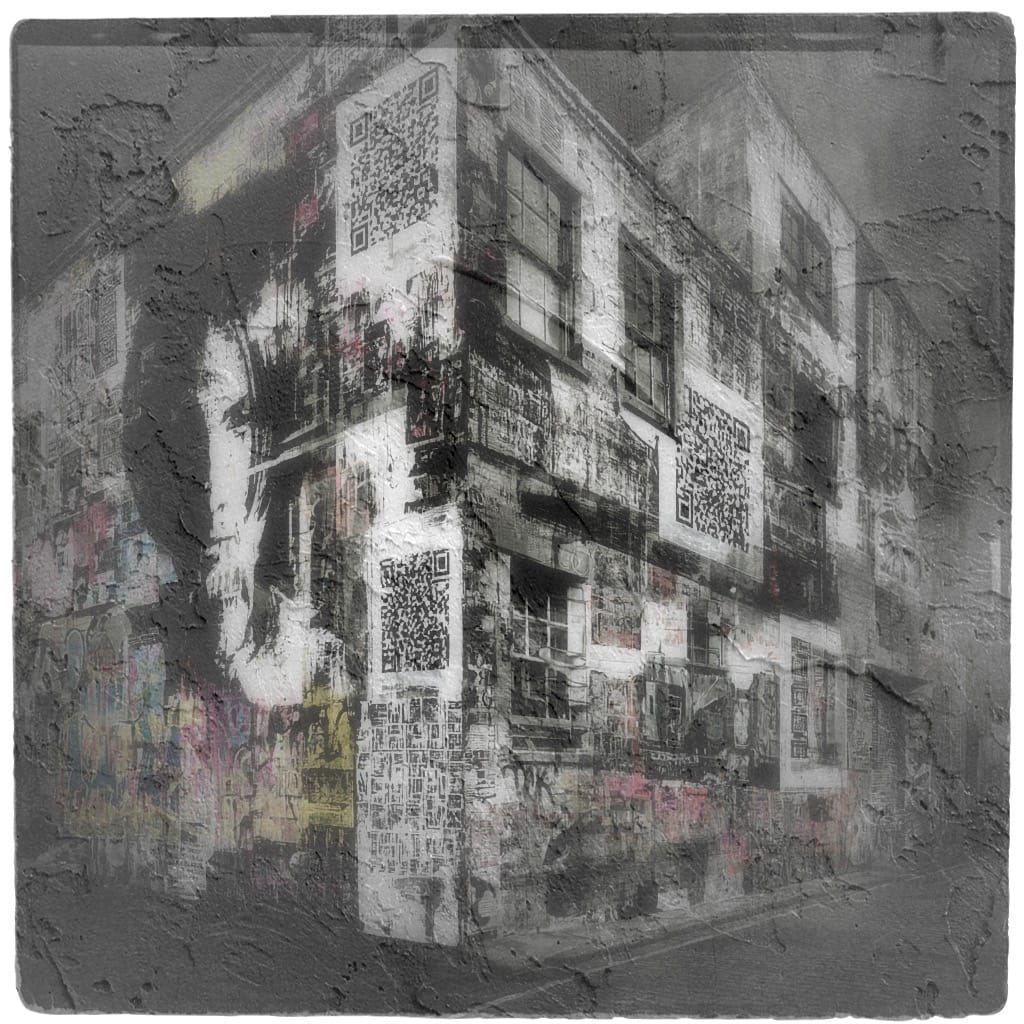
If the platforms are not reliable community spaces, and they are not, and if the audiences are partially phantom, and they are, and if the moderation is either absent, inconsistent, or conducted by AI systems that can't reliably tell the difference between a legitimate creator and a bot, and they can't, then what, precisely, are these spaces for?
The honest answer, from the perspective of the people who own them: they are surfaces for delivering targeted advertising to users whose behaviour has been modelled with enough granularity to predict what they'll click on before they know themselves. The community, the conversation, the content, all of it is the means by which attention is harvested and sold. You are not the user. You are, in the most literal sense, the product.
From the perspective of anyone else, a creator, an activist, a small business, a person who simply wants to talk to people who share their interests, the platforms are infrastructure you don't own, operated under terms you didn't negotiate, subject to unilateral changes you'll find out about after the fact, populated by an audience that may be substantially automated, in an information environment where no one is reliably checking whether anything is true.
Use it like you'd use a wall. Spray something on it. Don't build your house there.
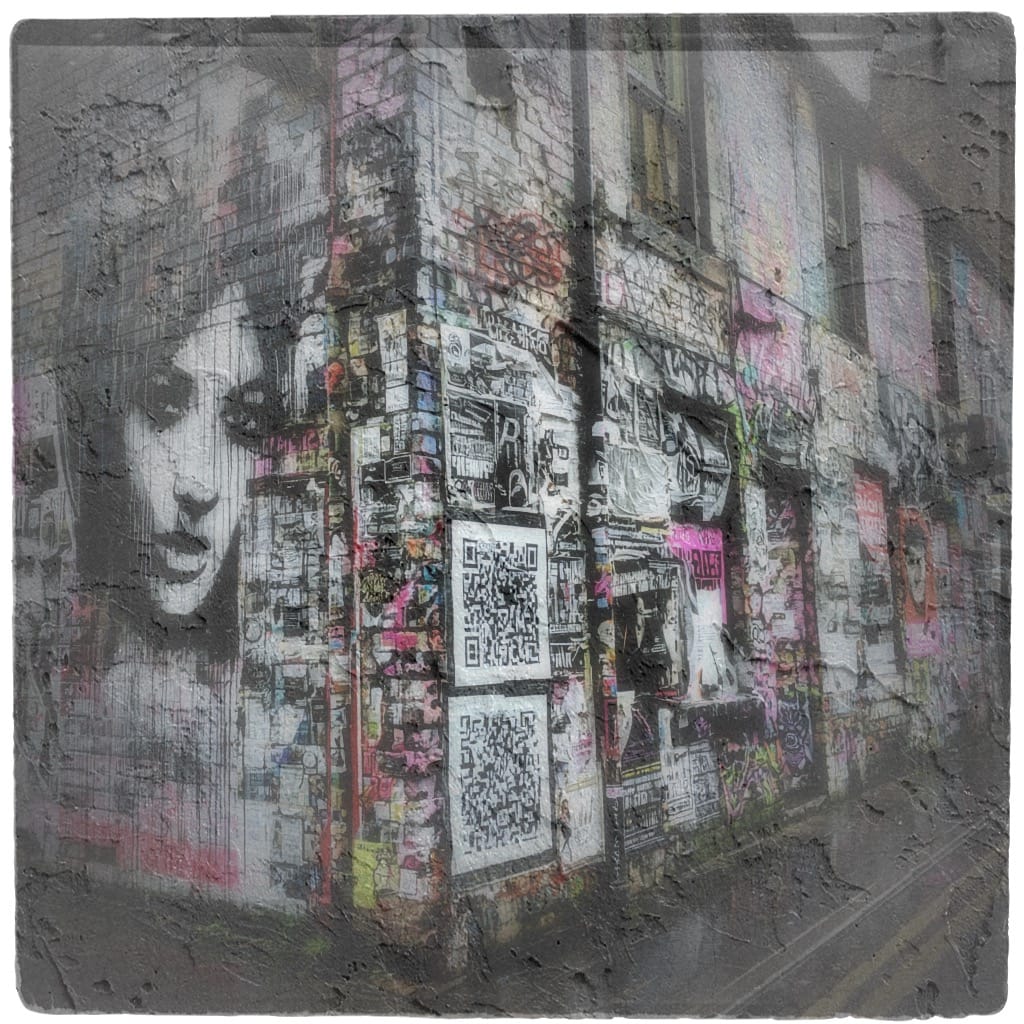
Treat it with contempt, or treat it as a surface, those are not the same thing, but they arrive at the same practical conclusion.
Contempt: recognise what these platforms are, what they were built to extract, what they've done to the information commons, and refuse to invest in them as though they were neutral infrastructure. They are not neutral. They are architectures of extraction with a social interface.
Surface: use them the way you'd use the wall. Put your work there. Put a QR code there if you like. Direct traffic elsewhere. Don't live there. Don't build there. Don't mistake the wall for a home.
The graffiti model is actually a fair one. Street art on a corporate wall doesn't legitimise the wall. It doesn't endorse the building behind it. It says: this surface exists, I have something to say, here's where I'm saying it, the surface is not the point. The point is whatever you're directing people toward when they look up from your tag and start walking.
Build your platforms. Own your infrastructure. Maintain the spaces where the actual work happens, the site, the game, the book, the real thing, and treat social media as the fly-posting circuit it has always been, now more visibly than ever. Fast, cheap, ephemeral, unreliable. Good for a notice. Not a foundation.
Tag it and keep walking.
All digital image collage designs created by Lloyd Lewis ©2026 Art of FACELESS
Lloyd Lewis is the founder of Art of FACELESS (AOF), an independent multimedia collective based in Cardiff, Wales, established 2010.
STOP READING FOR A SECOND. This node is 100% independent. No tracking. No ads. Powered purely by the Art of FACELESS creative collective and physical print distribution.
Drop your email to initialize your node, unlock the rest of this file, and support independent publishing.
 Art of FACELESS ONLINEArt of FACELESS ONLINE
© 2026 Art of FACELESS. All rights reserved.
The Hollow Circuit™, Hyperstition Architecture™,
The Veylon Protocol™, and Cognitive Colonisation™
are proprietary intellectual property of Art of FACELESS.