Did you ever wonder why the meat of a cow, calf, and pig is beef, veal, and pork (all French-derived) but the meat of the chicken is, well, chicken? This is language silently sorting your reality. The poor can eat chicken, but the wealthy get to eat beef.
There are subjects that look dry on the surface and turn out to be live wires the moment you touch them. Language is one of those subjects. Not linguistics in the academic sense, not the jargon, not the journals, but the actual words you reach for when you're tired, or angry, or filling in a form you didn't ask to fill in. The words that were already there when you arrived, already sorted, already carrying weight you didn't put on them.
This is a series about that weight.
It started, as a lot of things do here, with someone noticing a pattern and refusing to let it go. The series will run across contributors on both sides of the Atlantic — writers working from inside their own version of English, asking the same question from different angles: who built this, who does it serve, and what does it cost the rest of us?
The pieces won't always agree with each other. That's the point. American English and British English diverged at the accent level. At the structural level, the Latin and Greek machinery, the French inheritance, the colonial freight, they're running the same operating system. This series is interested in where those systems converge, where they differ, and what that gap tells us about class on both sides of the water.
The first piece is from a writer, maker, and AOF member of the collective, based in the United States. She came to this series with a specific question and followed it somewhere uncomfortable. We think that's exactly the right place to start.
A synonym is not just a synonym. It is a measure of class, a history lesson, and an indicator of who you are.
That may sound dramatic, until you start to notice the patterns of who uses what word and when. A person lives in a house but the wealthy live in a mansion. You might ask for help, but the wealthy request assistance. Do you start something, or do you commence it? The former comes from Old English, the latter through French, from Latin.
This is no accident.
After the Norman Conquest of 1066, French-speaking Normans took over the major positions of power in England. For centuries Anglo-French dominated law, literature, and administration, while English remained the language of the majority beneath them.
This layering kept one side of English close to the field, and the other close to the table those fields fed. The house, the animal, the ordinary. French, meanwhile, moved into the court, the government, and the business contract. To us the power separation is explained away through elite education and professionalism. Perhaps the wool has slipped from our eyes in the last decade, exposing the charade for what it is.
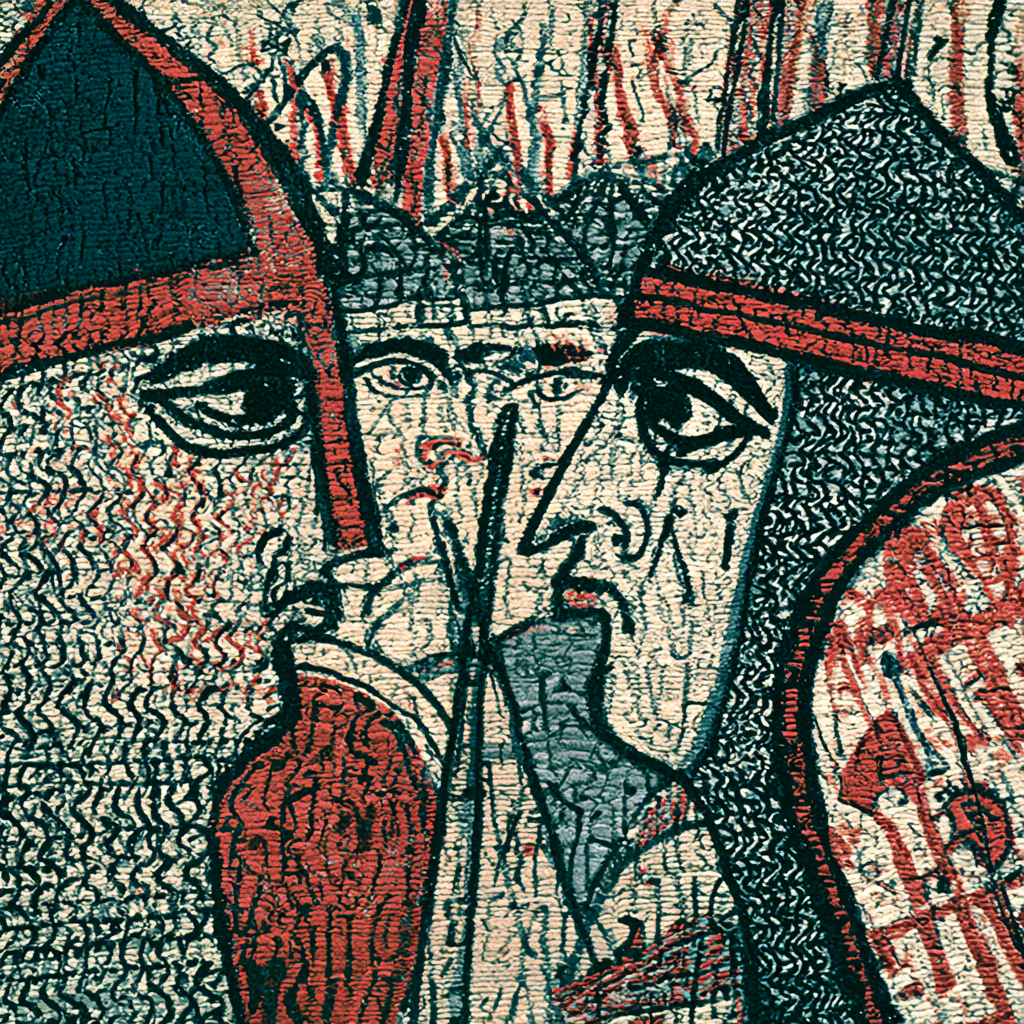
Did you ever wonder why the meat of a cow, calf, and pig is beef, veal, and pork (all French-derived) but the meat of the chicken is, well, chicken? This is language silently sorting your reality. The poor can eat chicken, but the wealthy get to eat beef.
This divide may not live in everything, but English is especially good at letting these layers sit side by side with one another. The plain word and the prestige word, layered and used interchangeably, but also not really. The plain word is what people use, the prestige word is what organizations use. It’s official, and it is above our plain language. Your friend may kick you out but a landlord evicts you. You can work eighty hours a week but the wealthy are productive in four. Your government does not spy, it conducts surveillance.
Prestige language launders violence and power.
This is why “proper English” has always been political. The question is not just if a sentence is clear, but who is it clear to and who approved it? Accent, vocabulary, grammar, and pronunciation become social scanners. They tell strangers where to place you before you have finished speaking. The language becomes a passport with Latin machinery and colonial debris. Every era that English conquered, traded, exploited, or sold left a bit of code inside it.
This is what makes the language so powerful and grotesque. It can use many words to say the same thing, then expects you to be privileged enough to understand each iteration. That’s how hunger becomes “food insecurity” and your rent going up is “inflation” with each one hoisting the burden onto you to understand what that really means.
Field vs feast. Words as a weapon in the class war.
Does that make you feel mad or irate?
V. Tracer is a US-based maker, coder, and speculative fiction writer whose work refuses to stay in one register.
Her fabrication practice spans 3D-printed artefacts, precision-cut objects, and alternative Tamagotchi design — physical systems that behave like narratives.
Her fiction project Maroon builds in-universe infrastructure the way AOF does: sites, personas, and artefacts that bleed across the boundary between story and real.
Her singular obsession — small-scale, reproducible skulls of any species — is both a craft discipline and a philosophical position. She has taken her work to major international platforms, including Paris Fashion Week, without a face attached to any of it.
STOP READING FOR A SECOND. This node is 100% independent. No tracking. No ads. Powered purely by the Art of FACELESS creative collective and physical print distribution.
ACCESS PROTOCOL:
Drop your email to initialize your node, unlock the rest of this file, and support independent publishing.
AOF Collective // V. Tracer
MAR00N — Cyberpunk Novel & Transmedia Universe
A transmedia narrative that spreads across the web like signal interference. Novel out now. Chapter 5 live. Pre-order C0C00N — ebook $9.99.