Pinterest Called Our Human-Made Art AI. Here's What That Actually Means.
On 30th April 2026, Pinterest labelled a human-made 3D portrait "AI modified." No appeal. No methodology. No accountability. This is what unvalidated classifiers do to skilled digital artists. We documented it.
Let me tell you what happened on the 30th of April, 2026.
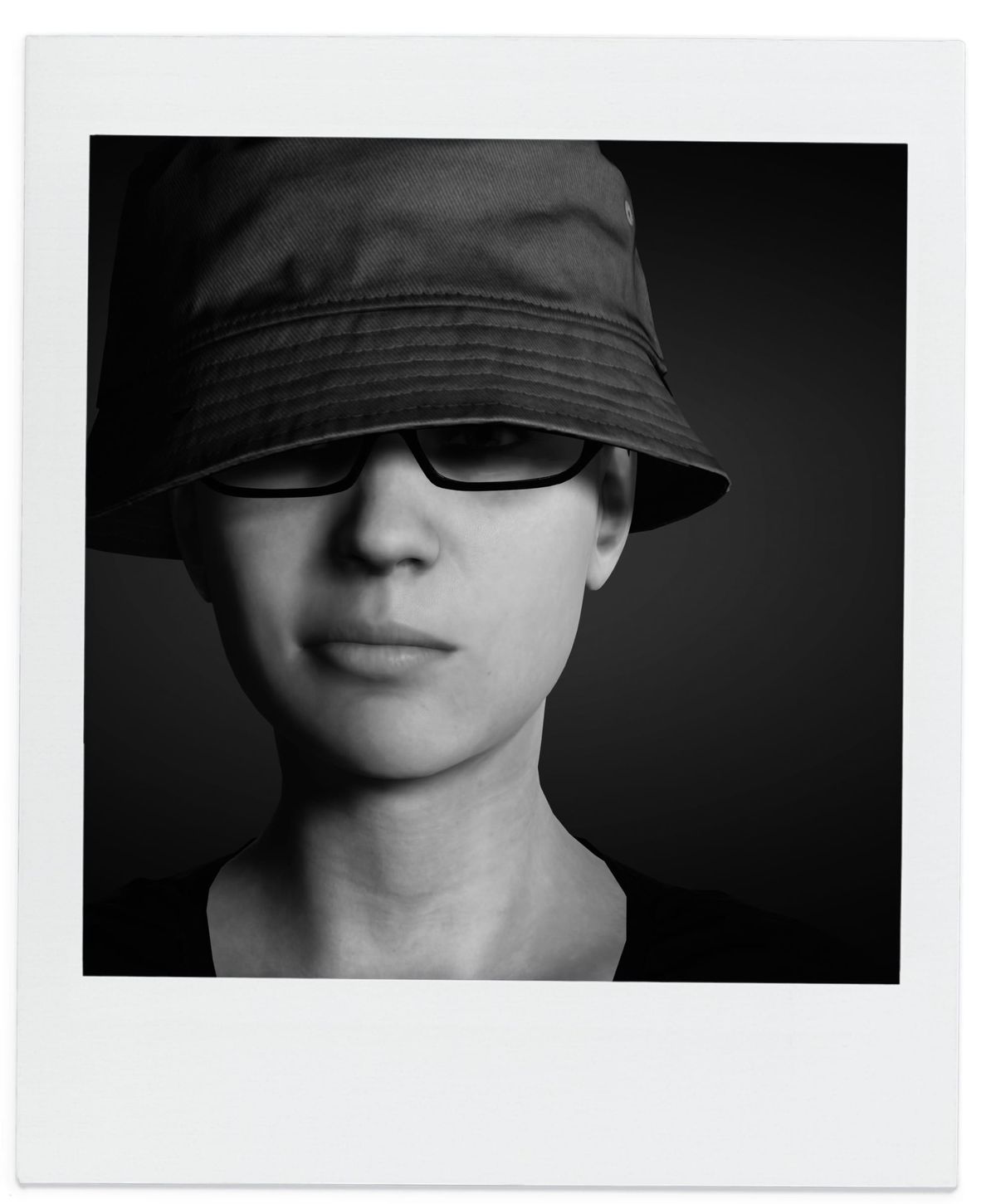
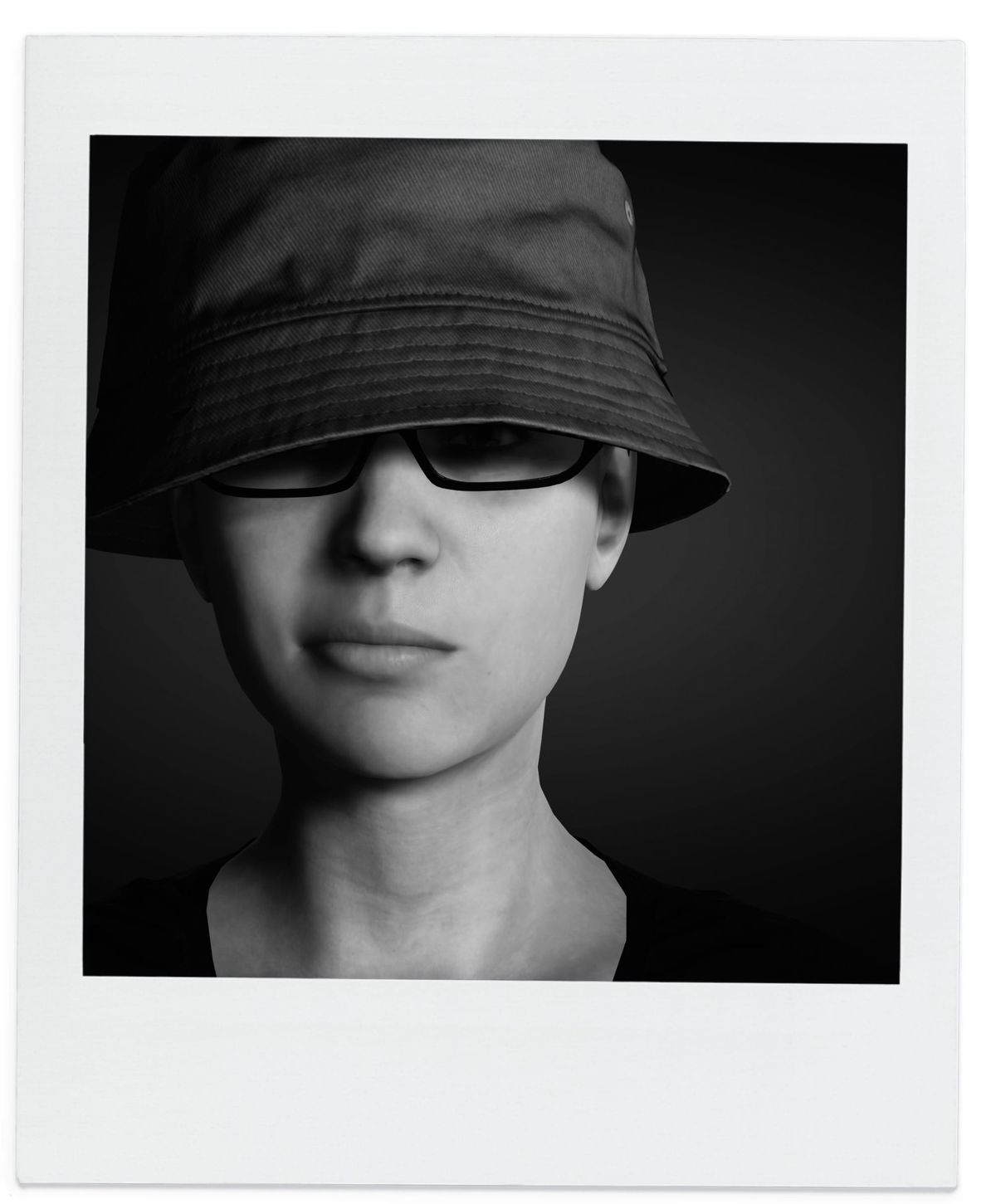
We'd uploaded a single image to Pinterest. A portrait. Black and white. A 3D human-made character from Alt.Cardiff2026— Rwth, one of the central figures in The Hollow Circuit® transmedia universe (the featured image of this piece).
Built with skill, intent, and a documented creative process across hardware and software that has cost us, conservatively, tens of thousands of pounds over the course of a creative practice that predates most of the platforms currently judging it.
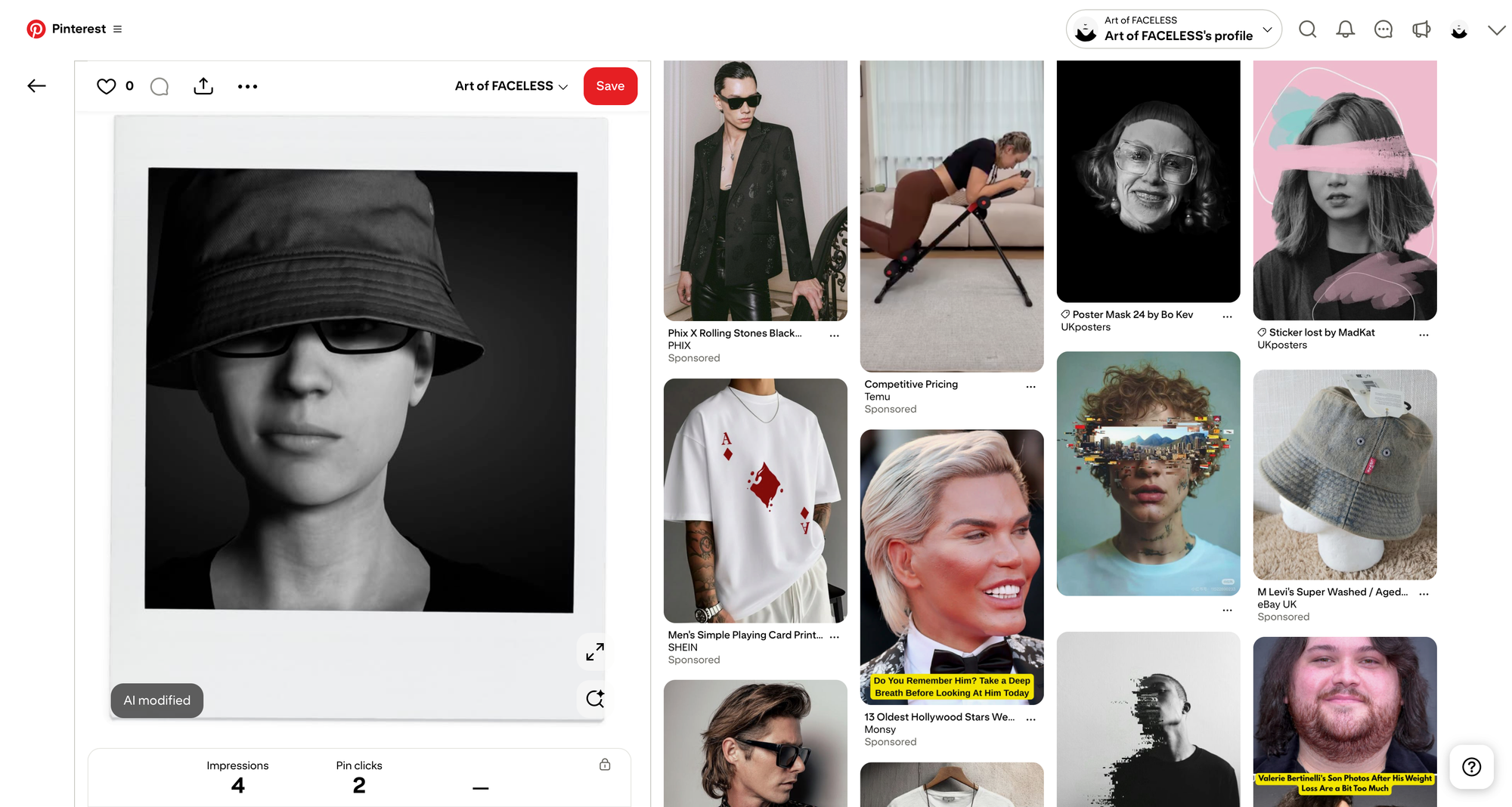
Pinterest labelled it AI modified within days.
Four impressions. Two pin clicks. The label sitting there in the bottom left corner of the preview like a parking ticket on a car.
Screengrab from our Pinterest page taken 30/04/2026 showing the 3D render labelled, falsely, as AI modified
I want to talk about what that actually means. Not just for us. For every 3D artist, every digital compositor, every photographer working in Adobe, every disabled creator who uses any assistive tool in their workflow. Because this isn't a minor inconvenience. This is an unvalidated automated system making a public, permanent, career-affecting judgement about the nature of your work — with no meaningful appeal mechanism worth the name (the damage is done as soon as the label is falsely applied), no published methodology, no accuracy threshold, and no accountability to the people it harms.
The Setup
You already know some of this. We left Pinterest in February 2026 after they began systematically mislabelling our legitimate Reallusion and Adobe work as AI-generated. We published our position. We put up a withdrawal notice. We documented it.
Then, because we are apparently constitutionally incapable of leaving well enough alone, we decided to run an experiment. We posted the withdrawal notice itself — a text poster, no image content — and watched it get ten impressions and one click. Then we posted the image of Rwth (above).
The portrait of a character we have spent a year developing, rendered with craft and technical skill and documented provenance — four impressions, labelled AI modified, effectively dead on arrival.
And here's the part that should make every digital artist reading this feel genuinely sick: we knew this was coming. We ran the experiment specifically because we already knew what the result would be. We just needed it on record. We needed the screenshot. We needed the timestamp.
Because this is not a one-off. This is not a glitch. This is what these systems do to human-made 3D work. Routinely. Systematically. Without consequence.
What Is Actually Being Destroyed Here
Let me be specific about the scale of what Pinterest's classifier — and every other unvalidated detection system currently operating on the open market — is actually destroying.
It is destroying reach. Pinterest was, for years, one of the most significant traffic drivers for independent visual artists. Not Instagram-significant, where you perform for an algorithm that changes quarterly. Pinterest-significant, where a well-made image could circulate for years, accumulate saves, and send a steady stream of genuinely interested people to your work. That is gone for us. Our account, which was generating tens of thousands of impressions, is now throttled to single figures. That happened within days of us publicly calling them out.
Pinterest is now destroying credibility.
When a platform labels your work AI-modified, that label travels. It shapes how people perceive the work before they've looked at it. In a landscape where the discourse around AI art is already a dumpster fire of bad faith and pitchforks, having a major platform pre-emptively stamp your work is not neutral. It is an active intervention in how your creative output is received. It is, functionally, defamatory.
It is destroying livelihoods. Tens of thousands of pounds of hardware and software. Reallusion licences. Adobe subscriptions. Years of accumulated technical skill in 3D rendering and compositing. All of it — rendered, I use the word deliberately, worthless by a classifier that was never validated to any published standard, never subjected to independent audit, and never designed with the people it would harm in any room where decisions were made.
And it is destroying something harder to quantify but no less real: the will to keep going.
The Radicalisation Nobody Is Talking About
Here is the thing that is not being discussed anywhere. Not on the AI art discourse platforms. Not in the #fuckAI threads. Not in the breathless think-pieces about creative authenticity and the death of craft.
The harder the pushback against honest, evidenced conversations about the AI art landscape, the more creators like us stop having those conversations and start making different decisions.
We've spent years making a careful, documented, publicly accountable case for a nuanced position: AI as a tool, human craft as the irreducible centre, original IP as the thing worth defending. We built a framework. We published our methodology. We filed trademarks. We wrote the piece about what AI assistance actually means in a disabled, working-class, zero-budget creative practice where the alternative to an AI tool is frequently just not making the thing at all.
And in return, Pinterest stamped our human-made 3D work as AI modified. The mob on social media hashtags 'fuckAI' for sport. The detection economy sells unvalidated classifiers to platforms who use them to make public judgements about creative authenticity without a shred of methodological rigour.
So. Fine.
If we're going to be labelled AI artists regardless of what we actually make, if the nuanced position gets us the same treatment as the bad actors, if the platforms cannot tell the difference and the mob doesn't want to — then the careful, documented, publicly accountable case starts to feel like a courtesy extended to people who have no intention of returning it.
The HERAKLIKATS exist because of this. Original characters. Original IP. Conceived in Heraklion. Cider-fuelled and genuinely ours. And yes, produced with AI assistance, documented and declared, because if you are going to burn us for it anyway then at least we will have actually done it on our own terms with our own intent and our own creative vision driving every decision. That is not a surrender. That is a rational response to an irrational situation.
The harder you push — the more you reach for the pitchfork before you've looked at the work, at the 'art', the more you let an unvalidated classifier stand in for critical judgement, the more you treat "this looks like it might be AI" as equivalent to evidence — the more creators like us are going to say: fine. Fuck it. Fuck you. Now fuck off.
That is what is happening. Right now. To working-class and disabled creators who had the most to gain from AI tools used ethically and the most to lose from a discourse that refuses to make the distinction.
The Methodology Problem Nobody Wants to Address
I know what a validated analytical method looks like. I know what the acceptance criteria are. I know what happens when you deploy an unvalidated method in a context where the results affect real people. That was my professional life for 20 years before SPMS.
What Pinterest is running is an unvalidated classifier. There is no published methodology. There is no documented false positive rate. There is no independent audit. There is no accuracy threshold below which deployment would be considered unacceptable. There is no appeals process that constitutes genuine review. There is no accountability mechanism whatsoever.
In research, deploying an unvalidated method to make decisions that affect people's lives is not acceptable practice. It is not legal practice. The entire edifice of ISO validation, for example, exists precisely because we established, as a society, that automated systems making consequential judgements require evidence of their own reliability before they are allowed to operate.
Pinterest's AI detection classifier is making consequential judgements — about the nature of creative work, about the reach and credibility of artists' careers, about the public categorisation of years of skilled human labour — with no validation, no methodology, no accountability, and no meaningful redress.
That is not a minor policy disagreement. That is junk science with real-world consequences. And the platforms know it, and they continue anyway, because the people being harmed are small enough to be stamped on.
The Proof
We have it.
The full documented creative process for the image Pinterest labelled AI modified. The provenance. The methodology. The software. The render settings. The iteration history. Everything that demonstrates, beyond any reasonable doubt, that this is human-made 3D work produced with skill and craft and documented intent.
We are not going to publish it here for free.
If you want to see it — if you actually, genuinely believe in supporting artists, in the principle that human creative labour has value, in the idea that the conversation about AI and authenticity should be grounded in evidence rather than vibes and pitchforks — then you know where the paywall is.
Put your money where your "support artists" mouth is.
The proof will be behind it. That is not a provocation. That is the only logical response to a situation in which we are expected to justify our own craft to platforms and communities that have already decided what we are.
We've made the work. We've documented the work. We're done giving it away to people who will use it to argue with us.
What This Means Going Forward
We are not leaving the field. We are not going quiet. We are not going to stop making work, publishing work, or documenting the structural failures of the platforms and systems that are harming independent digital artists at scale.
But we are done being polite about it.
The three-part structure of what we do has never been clearer: artoffaceless.com for the documented editorial record. artoffaceless.org for the rigorous methodology — the ISO-standard analytical critique that makes the anger something more than noise. epicFAIL# for the naming, the shaming, the public record of platform failure that deserves to be searchable forever.
Pinterest labelled a human-made 3D portrait AI modified.
We have the timestamp.
We have the screenshot.
We have the provenance.
We have the methodology to prove it isn't AI.
They have a classifier they cannot explain.
Lloyd Lewis is a writer, researcher, and co-founder of Art of FACELESS, an independent multimedia collective based in Cardiff, Wales, operating since 2010. Art of FACELESS is the developer of The Hollow Circuit®, a transmedia psychological horror VN/RPG targeting a Steam early access release in Summer 2026.