Initializing...

Why Your Image Is Now a Liability: Authenticity, Identity, and the Age of Deepfakes
Photo by Jesús Rocha / Unsplash

Why Your Image Is Now a Liability: Authenticity, Identity, and the Age of Deepfakes


Share this post

For more than a decade, digital culture has promoted a simple rule: attach your real name and face to your work, and people will trust you. This logic shaped influencer culture, founder branding, and even professional networking. Visibility was framed as authenticity, and authenticity was framed as credibility.

That equation no longer holds. In fact, in an era defined by generative artificial intelligence and deepfakes, the public promotion of one’s image and name has shifted from an asset to a risk. The irony is sharp: the very behaviours once encouraged to signal authenticity now actively undermine it.

Authenticity has not died. What has died is the idea that showing your face is a reliable way to prove it.

The collapse of the face-as-proof model

Historically, faces functioned as trust shortcuts. Humans evolved to read facial cues as indicators of sincerity, intent, and identity. Digital platforms exploited this bias. Research into influencer marketing shows that visible faces, informal aesthetics, and perceived transparency increase audience trust and engagement. Authenticity became something that could be performed visually.

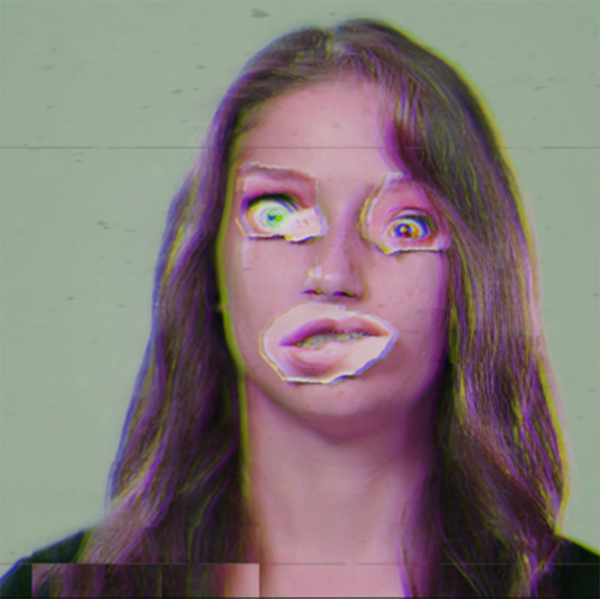
However, generative AI has broken the social contract underpinning that performance. Deepfake technologies now allow faces, voices, and mannerisms to be convincingly replicated with minimal effort and cost. Seeing someone say something is no longer evidence that they ever did.

Legal scholars and policy researchers warned early that deepfakes would destabilise trust infrastructures, not merely spread misinformation. Subsequent studies confirm that synthetic media can alter beliefs, create false memories, and erode confidence in all visual evidence—not just manipulated content. The result is a credibility crisis: if everything can be fake, then nothing visible can be trusted by default.

This is not an abstract problem. Deepfake pornography, harassment campaigns, financial fraud, and political disinformation increasingly rely on readily available public images. The more material that exists of a person online, the easier it becomes to generate plausible fabrications.
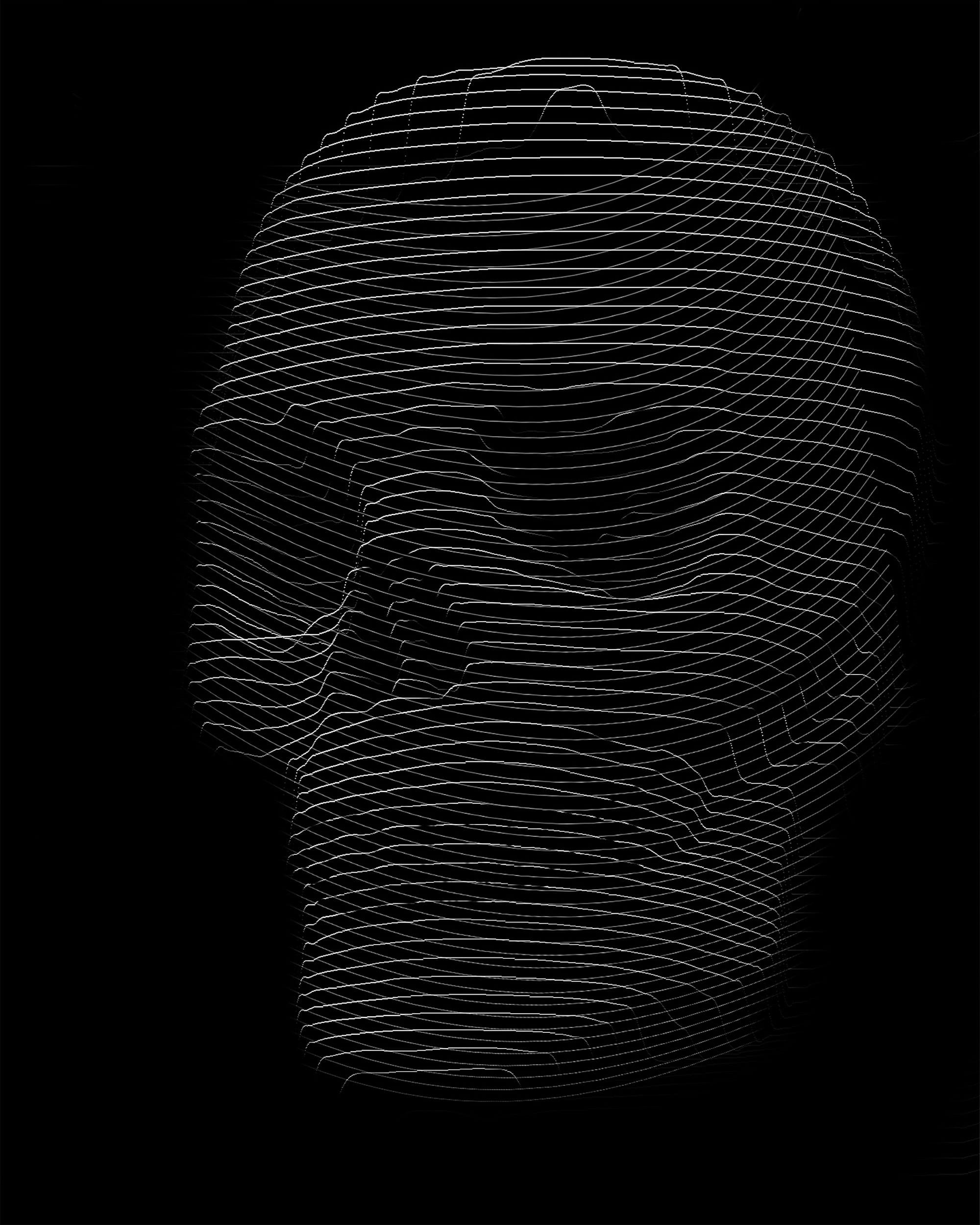
A black and white photo of a skull
Photo by KC Shum / Unsplash

The irreversibility problem of biometric exposure

What many creators and professionals still underestimate is that faces are not just images. They are biometric data.

Unlike passwords, faces cannot be changed. Once sufficient visual data is publicly available, it can be scraped, modelled, and reused indefinitely. Academic research in biometric security consistently highlights this asymmetry: when biometric identifiers are compromised, the damage is permanent.

From this perspective, traditional personal branding advice—post more video, be recognisable, be consistent—reads less like career guidance and more like negligent data exposure. Every additional clip improves the training set for potential misuse.

This is where the argument shifts from aesthetics to ethics. Continuing to promote one’s image as a primary trust signal is not simply outdated; it is dangerous. It assumes a media environment that no longer exists.
Why facelessness is not inauthentic

Against this backdrop, the philosophy advanced by Art of FACELESS is not a rejection of authenticity but a recalibration of it.

Since 2012, Art of FACELESS has argued that identity should be treated as something curated and protected, not surrendered for reach. Its core insight is simple: when faces are infinitely replicable, authenticity must be anchored elsewhere.

Facelessness relocates trust from the body to the work. Credibility emerges from consistency, documented process, long-term contribution, and peer validation rather than visual familiarity. This mirrors older scholarly models of reputation, where authority was earned through traceable output rather than personal exposure.

Importantly, this approach is not synonymous with anonymity. Faceless practice still involves accountability; it simply refuses to equate accountability with biometric visibility.

a pole with a bunch of stickers on it
Photo by ev / Unsplash

Cultural and economic signals of a shift

The broader creator economy is already reflecting this logic. Media coverage has documented the rise of faceless creators who operate at scale without attaching their personal identity to content. Algorithmic changes have reduced the advantage of recognisable faces, while AI tools enable production without constant self-exposure.

What distinguishes Art of FACELESS from commercial faceless creator trends is intent. Rather than optimising for efficiency alone, it frames facelessness as cultural resistance: a refusal to allow identity to become raw material for extraction, surveillance, or synthetic abuse.

In this sense, facelessness is not hiding. It is boundary-setting.

The real risk of clinging to visibility

Those who continue to promote their image and name as proof of authenticity face two overlapping dangers.

First, they are relying on a signal that can be forged at scale. Second, they are making themselves easier to target—by harassers, fraudsters, or automated systems that do not care about truth, only plausibility.

As deepfake technologies improve, the reputational cost of visual exposure will increasingly be borne by individuals, not platforms. Correction lags behind virality, and denial rarely travels as far as spectacle.

The future of authenticity will therefore not belong to the most visible, but to the most verifiable.

Conclusion

Authenticity was never meant to be a performance. It was meant to be a relationship between action and meaning. In the age of deepfakes, faces have become unreliable narrators of that relationship.

Choosing not to centre one’s image is no longer a fringe aesthetic choice. It is a rational response to a media environment where identity can be cloned, distorted, and weaponised.

In that context, the work of Art of FACELESS does not signal retreat. It signals adaptation, and perhaps survival.


References

Abidin, C. (2016). “Visibility labour: Engaging with influencers’ fashion brands and #OOTD advertorial campaigns on Instagram.” Media International Australia, 161(1), 86–100.

Chesney, R., & Citron, D. (2019). “Deep fakes: A looming challenge for privacy, democracy, and national security.” California Law Review, 107(6), 1753–1820.

Citron, D. (2022). Cyber Civil Rights. Oxford University Press.

Farid, H. (2018). “Digital image forensics.” Scientific American, 298(6), 66–71.

NIST (2018). Face Recognition Vendor Test (FRVT): Morphing. National Institute of Standards and Technology.

Vaccari, C., & Chadwick, A. (2020). “Deepfakes and disinformation.” Social Media + Society, 6(1).

Westerlund, M. (2019). “The emergence of deepfake technology.” Technology Innovation Management Review, 9(11), 40–53.

Art of FACELESS (2012–). Essays and publishing philosophy on faceless identity and distribution.

Art of FACELESS | Instagram | Linktree
View artoffaceless’s Linktree to discover and stream music from top platforms like Spotify, Apple Music here. Your next favorite track is just a click away!

Share this post
Comments

Be the first to know

Join our community and get notified about upcoming stories

Subscribing...
You've been subscribed!
Something went wrong
NEWS: Project "Alt.Cardiff2026" Launch Details

NEWS: Project "Alt.Cardiff2026" Launch Details

We are proud to announce the release structure for the upcoming graphic novel series, Issue #1: The Church Street Valyphos in the ZineGlitch comic Alt.Cardiff2026. To ensure the project meets all Online Safety Act (OSA) guidelines while preserving artistic integrity, the release will be tiered: 1. The Zine (Standard Edition): Available via Itch.io and Print. Features the core Noir narrative. Rated 15+. 2. The Null Gate (Subscriber Edition): Available via Patreon. Features the "Director's Cut


FACELESS

FACELESS

Synopsis of The Resonance Keepers of Crete Reimagined: a short story by Awen Null

Synopsis of The Resonance Keepers of Crete Reimagined: a short story by Awen Null

The story is exclusively available on itch.io as an Ancient Greek fusion, followed by a contemporary English companion version Marina sits alone on the obsidian sand beach of Cape Lithino, Crete, feeling the oppressive weight of ancient trauma in the landscape. Above her, the ominous constellation called the Oionos burns in the dark sky as a supernatural storm rages. Marina and her companion Alexis have become unwilling instruments of otherworldly forces, their mutated bodies acting as organic


FACELESS

FACELESS