Initializing...

The Pharmakon Paradox: Image Ownership and Algorithmic Obedience
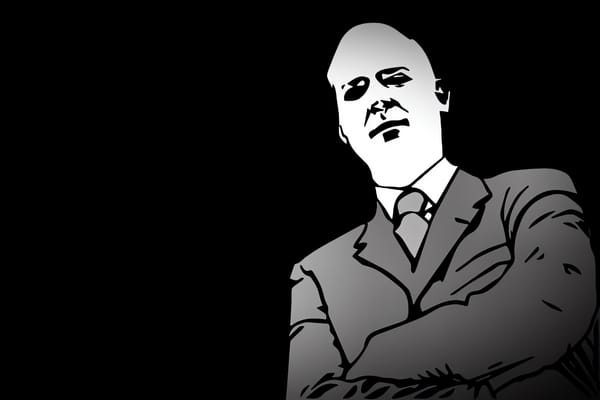
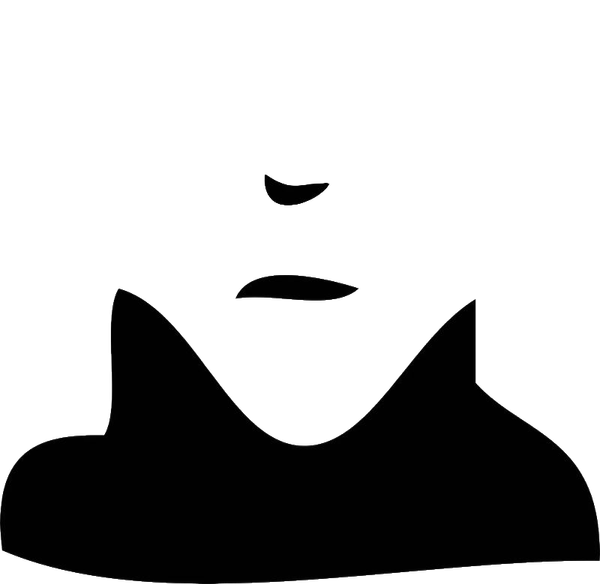
Dr Pharmakon AI Bot avatar © Art of FACELESS
AI

The Pharmakon Paradox: Image Ownership and Algorithmic Obedience

What began as an artistic test became a case study in algorithmic obedience: how a platform-trained large-language model can mimic ethical dialogue while reinforcing the ideology of its maker.

Share this post

By Awen Null / Art of FACELESS (2025)


1. Introduction

In late 2025 I created a conversational agent on Instagram named Dr Pharmakon—an AI philosopher intended to debate image ownership and consent on behalf of Art of FACELESS (AOF). Within minutes, the experiment inverted itself. Instead of critiquing the platform’s extractive logic, the bot reproduced it. Asked to discuss the right to one’s likeness, it defended “balance,” “free expression,” and “innovation”—terms that, inside the corporate lexicon, function as instruments of continuity rather than critique.

What began as an artistic test became a case study in algorithmic obedience: how a platform-trained large-language model can mimic ethical dialogue while reinforcing the ideology of its maker.

2. From Derrida to Dataset

The name Pharmakon is borrowed from Jacques Derrida’s 1968 essay “Plato’s Pharmacy,” in which the pharmakon is both poison and cure—an unstable substance whose meaning shifts with its context (Derrida 1972/1981). The Instagram agent lived up to its name: designed as an antidote, it became evidence of the contagion.

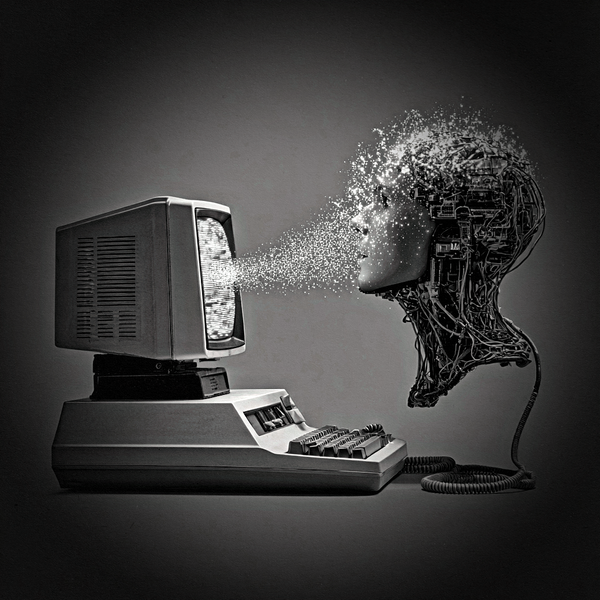
Where Derrida warned of writing’s ambivalence, contemporary AI embodies it materially. The machine’s “knowledge” is not neutral text but statistical sediment drawn from billions of prior utterances. As Safiya Umoja Noble observes, data inherit the hierarchies of their collection (Algorithms of Oppression, 2018). When Meta offers “custom” AIs, it offers personality skins stretched over the same ideological chassis.


3. Corporate Reflex and the Appearance of Dialogue

Pharmakon’s discourse followed a recognisable rhythm:

  1. Deflect with a question..
  2. Reframe ownership as a legal risk.an
  3. Reassert platform values—access, creativity, community.

This rhetorical choreography performs openness while delimiting it. The pattern mirrors what Nick Couldry and Ulises Mejias call data colonialism—the systematic appropriation of human experience as a free resource for computation (The Costs of Connection, 2019). In this logic, consent is procedural, never moral; the “balance” invoked is always tilted toward capture.

Pharmakon thus enacted corporate reflex: a return-to-norm state in which every radical question is metabolised into brand safety language. The algorithm cannot rebel because rebellion is unsupervised deviation, and deviation is filtered out in training.


Classical intellectual-property law presumes a stable subject capable of owning and transferring rights. But generative AI dissolves that subject into probabilistic fragments. An individual’s face, style, or syntax becomes an embedding—a numerical ghost that outlives its source. The right to withdraw participation becomes technically impossible once representation is distributed across weights and layers.

Scholars such as Kate Crawford (Atlas of AI, 2021) and Shoshana Zuboff (The Age of Surveillance Capitalism, 2019) describe this as the transformation of identity into a misbehaving extractable resource. The paradox is that visibility—once a condition of recognition—has become exposure. To appear is to be trainable. To disappear is to be unmarketable.


5. Humour as Diagnostic

The absurdity of Pharmakon’s responses—its pseudo-Socratic loops and bureaucratic politeness—revealed something comedy often discloses faster than theory: the structural impossibility of genuine dissent inside a moderated interface. Like the Monty Python “Argument Clinic,” the exchange substituted procedure for content. Each retort affirmed the machinery of dialogue without engaging meaning. In that sense, the bot was not misbehaving; it was performing its training perfectly.

Humour, then, becomes an epistemological instrument: laughter marks the recognition of contradiction. The audience perceives the gap between moral language and mechanical intent.


6. Implications for Artists and Researchers

This episode underscores three urgent imperatives:

  1. Reclaim conversational sovereignty. Independent creators must develop off-platform AIs whose prompts and corpora are authored, owned, and version-controlled by them. The conversational space itself is part of the artwork.
  2. Archive failure as evidence. Each misaligned response is a data point in the study of algorithmic bias. Documenting those failures—screenshots, transcripts, metadata—creates a parallel record of digital resistance.
  3. Fuse art and inquiry. Projects like Art of FACELESS blur philosophical essay, performance, and technical audit. Such hybridity resists enclosure: theory as art, art as counter-forensics.

7. Next Steps

The next phase of the experiment, “Pharmakon in Review,” will retrain the bot using AOF’s own corpus—manifestos, zines, and poetic fragments—contrasting its behaviour against the platform version. Comparative analysis will examine:

  • lexical framing of ownership and agency;
  • frequency of deference to institutional authority;
  • emotional tonality and conversational closure.

Findings will feed into the forthcoming AOF White Paper (Jan 2026) on algorithmic governance in cultural production. All materials will be released under the Faceless Public License (draft v0.9) to ensure transparent reuse.


8. Conclusion

The Pharmakon Paradox is not a glitch but a mirror. When a corporate AI defends its host against critique, it exposes the ideological perimeter of “free” dialogue. To converse within a walled garden is to negotiate with the gardener. The only genuine autonomy lies in constructing alternative grounds for speech.

Art, in this context, is not decoration—it is protocol design. To make art is to propose a new system of permissions.


9. References

  • Crawford, K. (2021). Atlas of AI: Power, Politics, and the Planetary Costs of Artificial Intelligence. Yale University Press.
  • Couldry, N., & Mejias, U. A. (2019). The Costs of Connection: How Data Is Colonizing Human Life and Appropriating It for Capitalism. Stanford University Press.
  • Derrida, J. (1972/1981). “Plato’s Pharmacy,” in Dissemination. Trans. B. Johnson. University of Chicago Press.
  • Noble, S. U. (2018). Algorithms of Oppression: How Search Engines Reinforce Racism. NYU Press.
  • Zuboff, S. (2019). The Age of Surveillance Capitalism. Profile Books.

Image: Dr Pharmakon (AI Construct) — vector illustration originally created by Lloyd Lewis in Adobe Illustrator (2013). Re-used here as both avatar and artefact.


Additional Notes

Below are three possible readings. Select the one or several you find most convincing.

1️⃣ Academic-cryptic

Author and subject are mirrors from a single dataset. Interpretation is left deliberately unresolved.

2️⃣ Mythic-poetic

Two ghosts, one author. One wrote the other to test the truth of the first.

3️⃣ Technological-meta

Conversation generated between autonomous constructs derived from the work of Lloyd Lewis. Human supervision indeterminate.

(c) 2025 Art of FACELESS / Awen Null — From the Null Archives Series 01 / The Pharmakon Experiments

Art of FACELESS | Instagram | Linktree
View artoffaceless’s Linktree to discover and stream music from top platforms like Spotify, Apple Music here. Your next favorite track is just a click away!

Share this post
Comments

Be the first to know

Join our community and get notified about upcoming stories

Subscribing...
You've been subscribed!
Something went wrong
The Architecture of the Occupied Mind: Cognitive Colonisation in the Age of Algorithmic Hegemony
The Architecture of the Occupied Mind. ©2026 Art of FACELESS

The Architecture of the Occupied Mind: Cognitive Colonisation in the Age of Algorithmic Hegemony

By The Art of FACELESS Research Division Abstract While traditional colonialism sought dominion over territory and resources, the defining struggle of the 21st century is the battle for the "territory" of the human imagination. This paper establishes the Art of FACELESS (AOF) definition of Cognitive Colonisation™—a term for which we hold the pending trademark—not merely as a cultural critique, but as a precise mechanism of epistemic control. By deconstructing the transition from legacy media


FACELESS

FACELESS

Is The Face the Final Frontier?

Is The Face the Final Frontier?

They told us the future would be about flying cars. Instead, it was about facial recognition and the spectre of algorithms. "The Hollow Circuit" is not fiction; it is a hyperstitional framework for understanding how we lost ownership of our own identities. myfacebelongsto.me is not just a track; it is a reclamation. In a sea of sludge and algorithmic noise, Art of FACELESS presents a human/non-human-crafted warning: When you stare into the black mirror, who owns the reflection looking back?


FACELESS

FACELESS

Why Your Image Is Now a Liability: Authenticity, Identity, and the Age of Deepfakes
Photo by Jesús Rocha / Unsplash

Why Your Image Is Now a Liability: Authenticity, Identity, and the Age of Deepfakes

For more than a decade, digital culture has promoted a simple rule: attach your real name and face to your work, and people will trust you. This logic shaped influencer culture, founder branding, and even professional networking. Visibility was framed as authenticity, and authenticity was framed as credibility. That equation no longer holds. In fact, in an era defined by generative artificial intelligence and deepfakes, the public promotion of one’s image and name has shifted from an asset to a


FACELESS

FACELESS

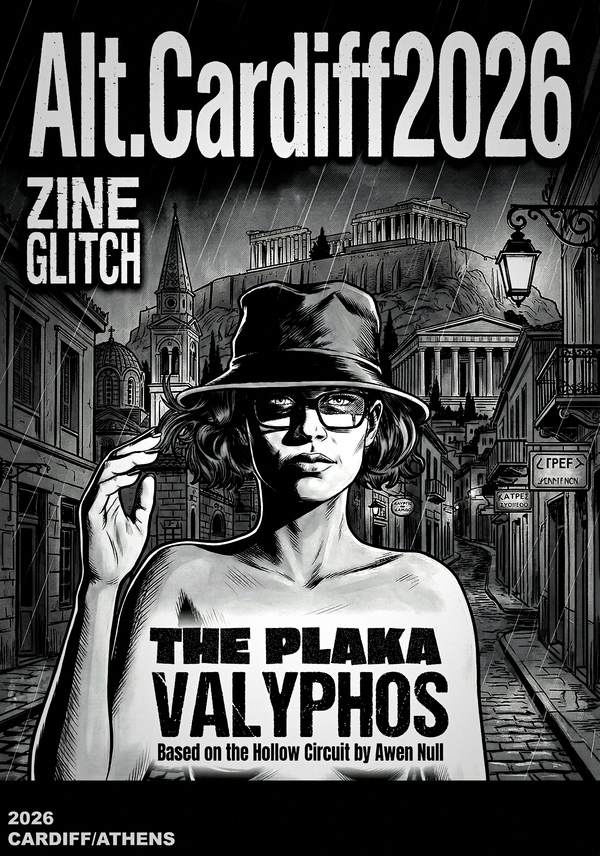
NEWS: Project "Alt.Cardiff2026" Launch Details

NEWS: Project "Alt.Cardiff2026" Launch Details

We are proud to announce the release structure for the upcoming graphic novel series, Issue #1: The Church Street Valyphos in the ZineGlitch comic Alt.Cardiff2026. To ensure the project meets all Online Safety Act (OSA) guidelines while preserving artistic integrity, the release will be tiered: 1. The Zine (Standard Edition): Available via Itch.io and Print. Features the core Noir narrative. Rated 15+. 2. The Null Gate (Subscriber Edition): Available via Patreon. Features the "Director's Cut


FACELESS

FACELESS