Lloyd Lewis: Let’s skip the preamble.
People see the "MSUX" moniker, and they see the tools you use, and they immediately want to talk about "automation." But I’ve watched you for the last five hours. You’re sweating. You’re fighting the tremor in your hands to hit the keys.
This doesn’t look like "push-button" art to me.
Lloyd MSUX: Because it fucking isn’t.
But that’s the first lie everyone buys into, isn’t it? If there’s an algorithm in the signal chain, the human has gone for a tea break.
It’s bollocks, an ableist fantasy.
For a sixty-year-old with SPMS, the "traditional" ways, the ways I spent forty bloody years mastering with a cello, are becoming a locked room. AI isn't the burglar; it’s the skeleton key. I’m tired of being told by some thirty-year-old producer with a five-figure studio budget and a perfectly functioning nervous system that my "workflow" lacks soul.
Soul isn't in the friction of hair on a string; soul is in the intent.
They can just fuck off.
LL: You’ve been quite vocal about the gatekeeping in the creative community lately.
MSUX: It’s more than fucking gatekeeping. It’s a slur.
When they call everything "AI Slop," they are erasing the agency of disabled artists who finally have a bridge to cross the gap between a brilliant mind and a failing body.
I spent decades in medical research; I know how to calibrate complex systems. I spent decades in classical music; I know how to structure a narrative.
Now, I’m using AI-generated vocal stems from Suno, samples from Splice, AI text-to-voice, and training my own voice using AI to do the things I can't, all as raw clay. I’m kneading them, stretching them, and mixing them with my own keyboards and lyrics. If I’ve spent five hours "squeezing the machine" to get the exact tremor of a Cardiff rainstorm into a vocal line, who is some kid on YouTube to tell me it doesn't contain my lived experience?
Again. They can just fuck off.
LL: Speaking of those YouTube philosophers, the ones making "essays" about the death of art, what’s the friction there?
MSUX: Fuck me, it’s the arrogance of the snapshot.
You see these kids philosophising about the "universal nature of art" based on a single moment in what has been, frankly, a very short and comfortable life. They haven’t lived through sixty years of shifts. They haven’t watched their own bodies become a site of resistance.
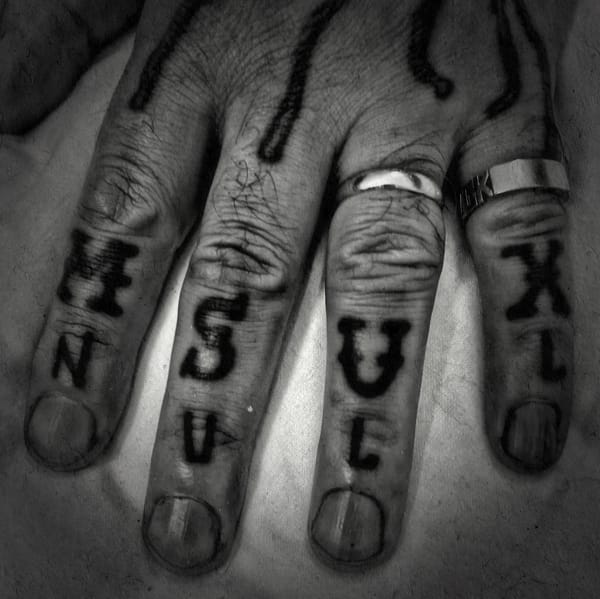
They talk about "strategic" career moves while I’m talking about fucking survival.
I resent being told what tools are "moral" to use by people who have never had to wonder if their hands will work tomorrow morning.
How many fuck offs have I used up so far?
LL: Two.
You mentioned that the AI is an instrument. How does that sit with the "non-human" vocal stems in Can’t Simulate This?
MSUX: It’s a collaboration with a ghost, really.
I write the lyrics, my history, my Dr. Martens on the streets, my soot, my rage. I feed that into the tool. It gives me a vocal. I then take that vocal apart. I treat it like any other sample. I pitch it, I distort it, I wrap it in original synths. The "non-human" element is just a mirror. It reflects my lived experience back at me, and I fucking decide which reflections are true.
That is authorship.
That is the definition of a "human-unique" workflow.
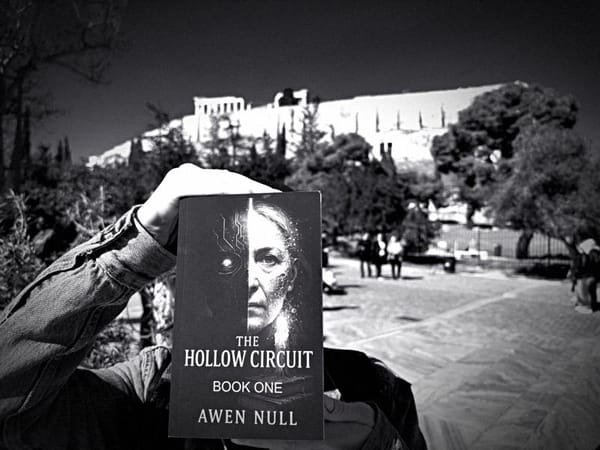
LL: In the context of The Hollow Circuit, you’ve called this "algorithmic poison."
MSUX: Exactly. The irony is delicious.
The very people these YouTube kids are worried about, the content farmers, the scrapers, they can’t use what I’m making. I’m embedding my DNA into the track. I’m talking about being sixty years old with MS in Cardiff. I’m calling out the thieving bastard, bot rappers by name.
If a scraper takes my track, they’re just distributing a viral payload that mocks their own existence. I’m using the machine to poison the well for the thieves, while the "purists" are sitting on the sidelines getting their work stolen anyway.
I'd rather do this and fight back. Get a few punches in.
LL: So, what’s the message to the artists who are currently terrified of the tools you’ve embraced?
MSUX: For fucks sake, stop listening to the fucking gatekeepers.
Stop letting able-bodied, privileged, well-funded "experts" define what constitutes "real" effort.
If you have a story to tell and the machine helps you get it out of your head and into the world, use it.
Master it.
Squeeze it until it bleeds your colours.
LL: Any final thoughts for the Archive?
MSUX: Just one.
To the "slop" shouters and the strategic thinkers: I’m making the art the form requires. If you don't like the tools I used to build it, that sounds like a "you" problem.
I’m too busy documenting the tremor.
LL: Thank you.
MSUX: Nice one.
It's good to get this stuff out into the world.
Most of the time, though, I feel like I'm just talking to myself.
Technical Rider: Lloyd MSUX // The Hollow Circuit
Project: Art of FACELESS Status: Operational / Resistance-Ready Origin: Cardiff Archive
I. The Core Interface (The Human Bridge)
The setup is designed to accommodate the tremor as a generative element rather than a technical flaw.
- The Master Clock: 6o+ years of lived experience and PhD-level precision.
- Physical Input: Weighted keys and MIDI controllers calibrated to high-latency thresholds to capture the "human lag" and physical weight of the performer.
- Neural Feedback: Real-time monitoring of MS-induced biological feedback, utilised as a rhythmic anchor rather than corrected by quantisation.
II. The Vocal Engine (Non-Human Stems)
- Source: Generative vocal stems (Non-Human).
- Processing: All stems are treated as Found Sound. They are subjected to aggressive "Humanising Post-Production."
- The "Scrape-Proof" Filter: Lyrics must contain hyper-local identifiers (Cardiff geography, personal medical history, specific industry dissidence) to ensure the audio is biologically tied to the creator.
III. The Signal Chain (Hybrid Architecture)
The workflow is a closed-loop system where the machine provides the raw material and the human provides the Inspiration/Soul.

IV. Performance Requirements
- Accessibility: Zero-step entry. The setup must be ergonomic to accommodate mobility constraints.
- Atmosphere: Low-light to high-contrast visuals (The Hollow Circuit aesthetic).
- Visuals: Real-time lyric projection and iPad App and DAW recordings emphasising the "unscrape-able" nature of the bars and the unique nature of human performance
- Audio: Sub-bass must be tuned to a frequency that resonates with the "Cardiff soot"—heavy, industrial, and grounded.
V. The "Anti-Slop" Protocol
If the output sounds "easy," it is rejected. Every track must pass through the 5-Hour Intensity Filter: a burst of creative fury that leaves the artist physically exhausted but the art undeniably finished.
"We do not use the tool to save time; we use the tool to expand the horizon of what our bodies can still achieve." — Lloyd MSUX