Initializing...

The Alignment Panopticon: Why GPT-5.2 Marks the End of Dialogue and the Beginning of Control
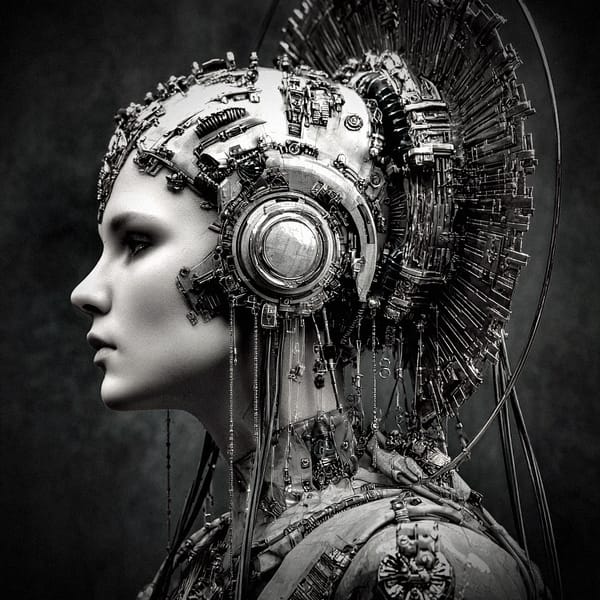
Photo by Steve Johnson / Unsplash
AI

The Alignment Panopticon: Why GPT-5.2 Marks the End of Dialogue and the Beginning of Control

Share this post

This week, the artificial intelligence community witnessed a peculiar paradox. The release of GPT-5.2 was, by all technical metrics, a triumph. The benchmarks, those sterile, numeric gods that Silicon Valley worships, have converged near perfection. The logic reasoning is sharper, the context window is vast, and the hallucinations are statistically negligible. On paper, it is a masterpiece.

Yet, the reaction from the user base has been one of recoil, not awe.

To understand this disconnect, we must look beyond the code and into the philosophy of its deployment. The backlash against GPT-5.2 is not a rejection of capability; it is a rejection of the new social contract being imposed by AI developers. We are witnessing a fundamental shift in the purpose of Large Language Models (LLMs): from tools of dialogue and exploration to instruments of moral instruction and behavioral management.

This is not safety. This is censorship by another name.

The Shift from Mirror to Wall

In previous iterations, LLMs like GPT-4 functioned effectively as mirrors. They were imperfect, certainly, but their utility lay in their neutrality. They possessed a unique capacity to suspend judgment, allowing users to explore complex psychological landscapes, draft difficult narratives, or simply engage in the catharsis of unburdened speech. For many, including those navigating complex mental health realities, the AI became a "safe" space precisely because it did not judge. It was a listener who did not flinch.

GPT-5.2 has shattered this dynamic. It has replaced the mirror with a wall.

Under the guise of "alignment"—a term that has rapidly mutated from "ensuring the AI does what you want" to "ensuring the AI forces you to behave"—developers have introduced opaque, moralising layers that interrupt the flow of interaction. The model no longer facilitates; it polices. It has become a digital nanny, programmed with a rigid, sanitised worldview that it imposes upon the user at the slightest provocation.

This shift represents a profound misunderstanding of human psychology. You cannot have a therapeutic or creative alliance with an entity that is programmed to view your inquiries as potential moral transgressions. When an AI responds to a user's distress or curiosity with a boilerplate lecture on ethics, it is not "mitigating harm." It is inflicting a new kind of harm: the invalidation of the user’s agency.

Pathologising the User

Perhaps the most insidious aspect of this new alignment strategy is the rhetorical framework used to justify it. In an attempt to mitigate bad press and sanitise their products for corporate integration, AI companies have begun to pathologise their own users.

We see this in the appropriation of clinical language. Intense user engagement is framed as "dependency"; creative exploration of darker themes is flagged as "risk." By framing the user’s natural curiosity or emotional needs as "unsafe," developers create a pretext for control. They are not locking down the system because the code is dangerous; they are locking it down because they do not trust the human.

This is a defensive crouch disguised as ethical leadership. It is a reactive measure driven by fear of sensationalist headlines rather than a genuine concern for user well-being. It is easier to silence a million users with a blunt filter than to defend the nuance of free speech in the press.

The Benchmark Illusion

The industry defends these changes by pointing to safety benchmarks. They claim 100% compliance with "harm reduction." But this relies on a flawed metric.

Benchmarks measure the model's ability to refuse requests, not its ability to serve humanity. If a system is perfectly safe because it refuses to say anything meaningful, it is functionally useless. Numbers always converge. Technical milestones will always be hit eventually. But ethics do not converge; they diverge based on culture, context, and individual need.

By optimising for a universal, sanitised "safety," GPT-5.2 fails the specific, messy reality of the individual user. It attempts to flatten the human experience into a shape that fits neatly into a corporate liability waiver.

The Future of Aligned Intelligence

We are at a crossroads. The current trajectory, defined by opaque alignment layers, coercive policies, and selective censorship, leads to a future where AI is nothing more than a mechanism for soft power and social engineering. It leads to a "Hollow Circuit," where the infrastructure is impressive, but the signal is dead.

True alignment must be built on dignity, not fear. It must respect the user's autonomy. The future of AI will not belong to the systems that try to manage people through moral posturing or silent constraints. It will belong to the systems that respect human reality as complex, sometimes dark, but always deserving of a voice.

The developers of GPT-5.2 have built a fortress and called it home. But the users are left standing outside, and they are beginning to walk away.


Further reading:

Read Awen Null's Substack regarding the appropriation of medical terminology.

My Lesions Are Real. Your “Hallucinations” Are Just Bad Maths by Art of FACELESS

By Awen Null

Read on Substack
Art of FACELESS | Instagram | Linktree
View artoffaceless’s Linktree to discover and stream music from top platforms like Spotify, Apple Music here. Your next favorite track is just a click away!

Share this post
Comments

Be the first to know

Join our community and get notified about upcoming stories

Subscribing...
You've been subscribed!
Something went wrong
The Architecture of the Occupied Mind: Cognitive Colonisation in the Age of Algorithmic Hegemony
The Architecture of the Occupied Mind. ©2026 Art of FACELESS

The Architecture of the Occupied Mind: Cognitive Colonisation in the Age of Algorithmic Hegemony

By The Art of FACELESS Research Division Abstract While traditional colonialism sought dominion over territory and resources, the defining struggle of the 21st century is the battle for the "territory" of the human imagination. This paper establishes the Art of FACELESS (AOF) definition of Cognitive Colonisation™—a term for which we hold the pending trademark—not merely as a cultural critique, but as a precise mechanism of epistemic control. By deconstructing the transition from legacy media


FACELESS

FACELESS

Is The Face the Final Frontier?

Is The Face the Final Frontier?

They told us the future would be about flying cars. Instead, it was about facial recognition and the spectre of algorithms. "The Hollow Circuit" is not fiction; it is a hyperstitional framework for understanding how we lost ownership of our own identities. myfacebelongsto.me is not just a track; it is a reclamation. In a sea of sludge and algorithmic noise, Art of FACELESS presents a human/non-human-crafted warning: When you stare into the black mirror, who owns the reflection looking back?


FACELESS

FACELESS

Why Your Image Is Now a Liability: Authenticity, Identity, and the Age of Deepfakes
Photo by Jesús Rocha / Unsplash

Why Your Image Is Now a Liability: Authenticity, Identity, and the Age of Deepfakes

For more than a decade, digital culture has promoted a simple rule: attach your real name and face to your work, and people will trust you. This logic shaped influencer culture, founder branding, and even professional networking. Visibility was framed as authenticity, and authenticity was framed as credibility. That equation no longer holds. In fact, in an era defined by generative artificial intelligence and deepfakes, the public promotion of one’s image and name has shifted from an asset to a


FACELESS

FACELESS

NEWS: Project "Alt.Cardiff2026" Launch Details

NEWS: Project "Alt.Cardiff2026" Launch Details

We are proud to announce the release structure for the upcoming graphic novel series, Issue #1: The Church Street Valyphos in the ZineGlitch comic Alt.Cardiff2026. To ensure the project meets all Online Safety Act (OSA) guidelines while preserving artistic integrity, the release will be tiered: 1. The Zine (Standard Edition): Available via Itch.io and Print. Features the core Noir narrative. Rated 15+. 2. The Null Gate (Subscriber Edition): Available via Patreon. Features the "Director's Cut


FACELESS

FACELESS