
Initializing...

STILL FACELESS. STILL HERE.
Featured image photography by @ichbinLLOYD © 2025 Art of FACELESS

STILL FACELESS. STILL HERE.

When we founded Art of FACELESS back in 2012, we did it with intention. To explore identity through absence. To create a space where artists, writers, and activists could speak without being tracked, judged, or flattened into a data point.


Share this post


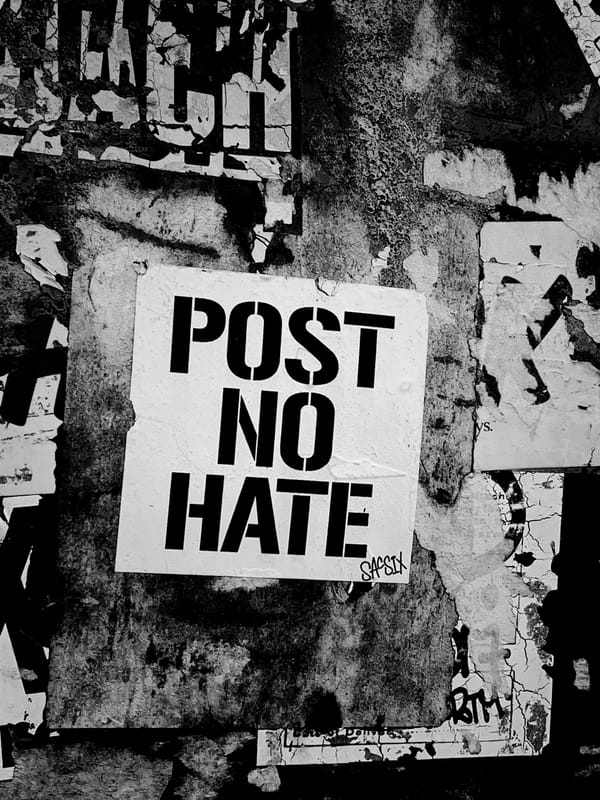
Reflections from Art of FACELESS on the Government’s Plan to Ban Face Coverings at Protests

When we founded Art of FACELESS back in 2012, we did it with intention. To explore identity through absence. To create a space where artists, writers, and activists could speak without being tracked, judged, or flattened into a data point.

Thirteen years later, we're now watching governments—of all colours—circle back to the oldest fear: the unseen. The unidentifiable. The person who refuses to be scanned.

Labour’s proposed face covering ban at protests is just the latest in a long line of measures aimed at silencing dissent under the guise of safety. But whose safety? For many of us, masks are not a provocation. They are a necessity. They protect us from illness, from surveillance, from retaliation. For some, they’re also an artistic or cultural statement.

We know what it’s like to be vulnerable. Many in our community are disabled, neurodivergent, or live with chronic illness. Some are carers. Others are simply cautious. COVID hasn’t vanished—and pretending it has doesn’t make immunocompromised people magically safer in crowded spaces.

Facial recognition technology is now routine at public events and transport hubs. Protesters—especially those already marginalised—risk being flagged, logged, and targeted later. And while some of us have chosen to reveal our faces for specific creative projects, that choice should always remain just that: a choice.

This isn’t about hiding. It’s about surviving—and creating freely, without coercion or fear.

Protest is part of the creative act. Its performance, expression, and resistance. It’s artists making the world visible in ways that statistics and policy papers never can. Silencing protest silences art. And banning face coverings during protests erases some of the most vulnerable voices from the conversation entirely.

Art of FACELESS will continue to stand with those who need to remain unseen to be heard. We support the right to anonymity, to autonomy, and to safety—in the streets, on the page, and behind the mask.

Still faceless. Still here.
—AOF


Share this post
Comments

Be the first to know

Join our community and get notified about upcoming stories

Subscribing...
You've been subscribed!
Something went wrong
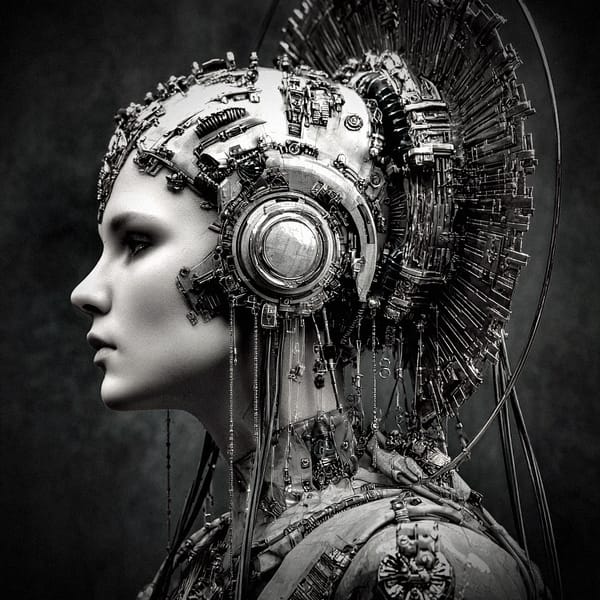
The Architecture of the Occupied Mind: Cognitive Colonisation in the Age of Algorithmic Hegemony
The Architecture of the Occupied Mind. ©2026 Art of FACELESS

The Architecture of the Occupied Mind: Cognitive Colonisation in the Age of Algorithmic Hegemony

By The Art of FACELESS Research Division Abstract While traditional colonialism sought dominion over territory and resources, the defining struggle of the 21st century is the battle for the "territory" of the human imagination. This paper establishes the Art of FACELESS (AOF) definition of Cognitive Colonisation™—a term for which we hold the pending trademark—not merely as a cultural critique, but as a precise mechanism of epistemic control. By deconstructing the transition from legacy media


FACELESS

FACELESS

Digital Necromancy and the Myth of Helplessness
©2026 Art of FACELESS

Digital Necromancy and the Myth of Helplessness

Why The Guardian’s lament for "truth" misses the point: We have the cure, we just refuse to take the medicine. They call it "content." We call it puppetry. Yesterday, a video circulated on Threads and X showing the faces of Freddie Mercury, Amy Winehouse, Elvis Presley, Ozzy Osbourne, and Kurt Cobain stitched onto a single, shifting torso, singing a breakup song they never wrote. It was technically impressive. It was also morally repugnant. This isn't just bad taste; it is Digital Necromancy.


FACELESS

FACELESS

The Alignment Panopticon: Why GPT-5.2 Marks the End of Dialogue and the Beginning of Control
Photo by Steve Johnson / Unsplash

The Alignment Panopticon: Why GPT-5.2 Marks the End of Dialogue and the Beginning of Control

This week, the artificial intelligence community witnessed a peculiar paradox. The release of GPT-5.2 was, by all technical metrics, a triumph. The benchmarks, those sterile, numeric gods that Silicon Valley worships, have converged near perfection. The logic reasoning is sharper, the context window is vast, and the hallucinations are statistically negligible. On paper, it is a masterpiece. Yet, the reaction from the user base has been one of recoil, not awe. To understand this disconnect, we


FACELESS

FACELESS