Apparently, I’ve crossed the Rubicon. I’ve now reached the stage of life where writing in complete sentences, with a trace of rhythm or thought, automatically makes people think I’m an algorithm.
The irony of literacy becoming suspicious in the age of content is almost poetic — if poetry weren’t also being monetised per click.
For context: I’m in my sixth decade on this planet. I still remember dial-up tones, Letraset, and when “cut and paste” involved scissors.
I’ve been writing — and overthinking — longer than most of today’s platforms have existed.
But here we are, in 2025, where the highest compliment a writer can get is being mistaken for a well-trained machine.
The irony runs deep.
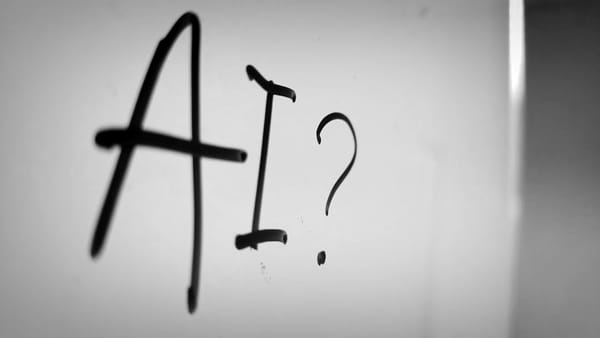
I have been writing about AI — critically, academically, and sometimes creatively — so perhaps I shouldn’t be surprised when someone assumes I am one.
Still, it’s fascinating that clean syntax now reads as suspicious.
A typo apparently equals authenticity; coherence must be synthetic.
I don’t care about likes, hearts, boosts, or any of the digital dopamine metrics Substack sells like crack.
I care about ideas. I care about the small, stubborn conversations that still manage to exist between the noise.
But maybe that’s too much to ask of the attention economy — nuance doesn’t trend.
So what am I supposed to do?
Type with one finger while deliberately misspelling things to prove I’m human?
Insert a few lols and emojis for organic flavour?
Maybe I should randomly mention my cat — I don’t have one, but it might help.
I’m not offended. I’m entertained. Because this is what happens in a culture that’s forgotten how to read tone, context, or history.
When everything looks like content, even thought starts to seem artificial.
If you want proof of life, here it is:
I’m a fallible human being with bad joints, too many tabs open, and an immune system that thinks it’s a philosophy student.
The only code I’m running on is caffeine.
— Lloyd Lewis
Art of FACELESS / 2025