by Lloyd Lewis
I’ve been writing longer than the internet has existed. Before we had “feeds” and “content,” there were typewriter ribbons, blotting paper, and envelopes sealed with spit and prayer. I posted my words, bound for editors who lived like mythical gatekeepers somewhere beyond the postmark. Then I waited — weeks, months — for the soft thud of a reply on the doormat. That sound was our algorithm: hope, silence, or the faint possibility of being seen.
My first poem was about Christmas. I was ten. It won a Scalextric set — small plastic cars whirring around a loop of bright hope — and my mother sold it to pay for Christmas dinner. That was my first art lesson: that words could put food on the table, even if the feast was brief.
At fourteen, I wrote my first published article — about salmon migration and conservation. I remember the smell of the riverbank, the way the light bent on the water, and the sense that life would always find its way upstream. I believed it then. I read now about raw sewage and privatisation, and I wonder whether the rivers remember our lost optimism.
At sixteen I was working full-time. We call that childhood now. Back then, it was simply life beginning. No talk of “gap years,” no curated identity, no pause between school and responsibility. You just stepped into the current and swam.
By nineteen, I was still sending stories to magazines. I have one rejection letter written in black ink by Alan Coren himself. “Enjoyed this,” he wrote, “but not quite for us. Keep going.” And I did. I got lots of rejection letters. They were like scratch cards — you tore them open in hope that one might reveal a win, that golden “yes” that meant you’d broken through.
The same happened later with photography. I’d post off slides in stiff cardboard boxes, always with a stamped, self-addressed envelope tucked inside for their safe return. Sometimes they came back bent or went missing. Sometimes they came back with a cheque. And once — I walked into WHSmith and saw my work on the cover of a national magazine. It didn’t feel like success. It felt like recognition — that somewhere, out there, an invisible hand had waved back. It paid the rent. Kept a roof over my head and food on the table.
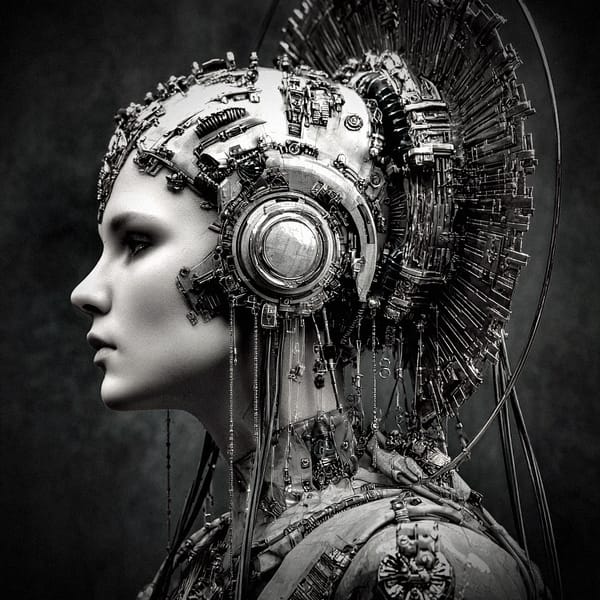
Now, at sixty-five, I’m told my writing “reads like AI.” I suppose it does.
But it’s not my writing that sounds artificial — it’s AI that sounds like me.
Because everything it knows, it learned from people like us — from the slow work of the hands, the long patience of the post, the endless drafts and red ink and rejections and Tippex and carbon paper that made us better. It learned rhythm from our essays, humanity from our metaphors, tone from our tired perseverance. My cadence — our cadence — became its syntax.
When I write now, I hear echoes of the decades feeding back: the smell of a photocopier, the sharp scent of developer fluid in a darkroom, the dusty sweetness of library shelves where the world’s wisdom waited. We lived in a world of weight — the weight of paper, of letters, of photographs you could hold. Now, everything floats — weightless, frictionless, forgotten as quickly as it’s seen.
AI doesn’t know that kind of waiting. It doesn’t know the ache of opening an envelope. It doesn’t know the terror and thrill of walking to a red pillar box with your heart folded inside. It doesn’t know what it means to fail in ink — to see “thank you but no” written by a human hand, not a form email.
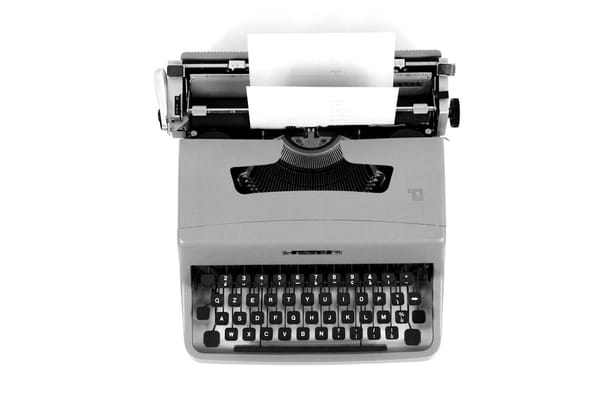
When people tell me I sound like a machine, I smile. I was there when machines first tried to sound like us: the clack of the Olivetti keys, the whir of a fax machine, the calm mechanical voice saying “end of message.” Every generation of technology was a kind of séance — an attempt to bring words back from silence. AI is only the latest ghost in that long line of hauntings.
I think of that boy by the river, watching salmon fight the current. That’s what writing has always been for me — pushing upstream against noise and neglect, carrying something fragile that refuses to die.
Yes, maybe AI reads like me. Because it does. Because we fed it the world. Because we built the scaffolding it now climbs. But I’m not competing with it. I’m conversing with it — like a fisherman talking to the river he’s known all his life. The river has changed. But it still whispers beneath the surface.
And somewhere, deep in the flow of code and current, the boy who wrote about salmon is still swimming — older now, but still searching for clear water, still writing, still waiting for the next envelope to fall through the letterbox.
— Lloyd Lewis
November 2025

art lesson