
Yanis Varoufakis is scared. In his latest column for The Guardian, he describes the rising tide of AI deepfakes as a “menace” that threatens to dissolve the very fabric of shared reality. He writes with the eloquence of a man watching a tsunami from a balcony; dread, awe, and total helplessness.
He is right about the dread. But he is dead wrong about the helplessness.
The problem with the mainstream panic over AI isn’t that it’s exaggerated; it’s that it is fundamentally lazy. It treats Artificial Intelligence like a weather event, a hurricane we must endure, rather than what it actually is: software.
And software has rules.
The Elitist Trap
When public figures like Varoufakis worry about deepfakes, they are usually worrying about reputation. They fear the political scandal, the fake speech, the stolen credibility.
But there are many other victims of this technology who aren’t politicians, some of whom are dead.
Yesterday, a video circulated on Threads and X showing the faces of Freddie Mercury, Amy Winehouse, Elvis Presley, Ozzy Osbourne, and Kurt Cobain stitched onto a generic AI torso, forced to sing a breakup song. It was grotesque. It was Digital Necromancy.
Yanis Varoufakis has a platform to correct the record if he is deepfaked. Freddie Mercury does not. The teenager in Cardiff whose biometric data is scraped from TikTok does not. The crisis isn’t that we can’t trust video; it’s that we have built an ecosystem that rewards the theft of human identity because it is “frictionless.”
The Solution is Boring (That’s Why Nobody Likes It)
We don’t need a UN treaty to fix this. We need C2PA.
The technology to verify digital files has existed for decades. We use it every time we make a bank transfer or sign a PDF contract. Cryptographic signatures. Metadata provenance. Content Credentials.
We know exactly how to prove a video is real. We know exactly how to prove a video is AI.
The reason YouTube, Threads, and X don’t mandate these “Digital Fingerprints” isn’t because the tech is hard. It’s because verification adds friction. And friction kills the viral “slop” pipeline that keeps users scrolling.
The Myth of the Victim
Varoufakis ends his piece with a sigh, leaving the reader feeling powerless. This is dangerous. It encourages passivity.
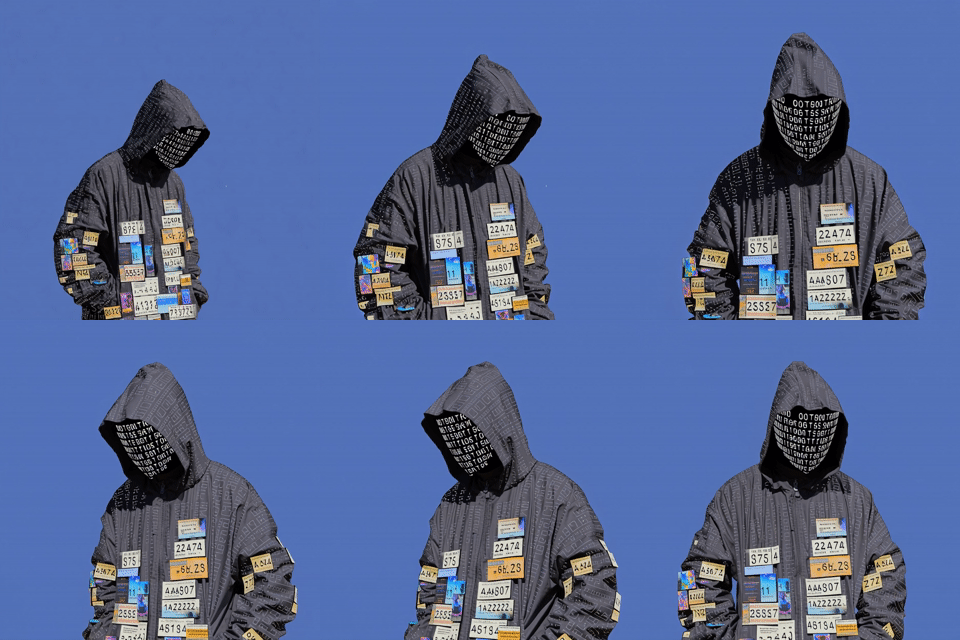
At Art of FACELESS, we refuse to be passive.
- When we use AI, we do so to create art, music, and narrative, as a tool, not a weapon.
- We document our provenance. We aren't angels; verification is a discipline, not a magic switch. We are actively refining our processes to ensure the right protocols are in place. We can’t retrofit the past, but we are committed to documenting the chain of custody for every important piece of work we create moving forward (for an example of a PDF, take a look at The Manifesto Of Facelessness on the Internet Archive).
- We advocate for the only rational response left to a system that refuses to protect you: Facelessness.
If the platforms won’t check the metadata, and the uploaders won’t ask for consent, then the only move left is to take your face out of the system entirely.
Don’t let the alarmists tell you that you are helpless. The cure for the “Menace” is sitting right there in the code. We’re just too lazy to click “Run.”
 Art of FACELESS