Initializing...

Dark Kittens [an analysis]
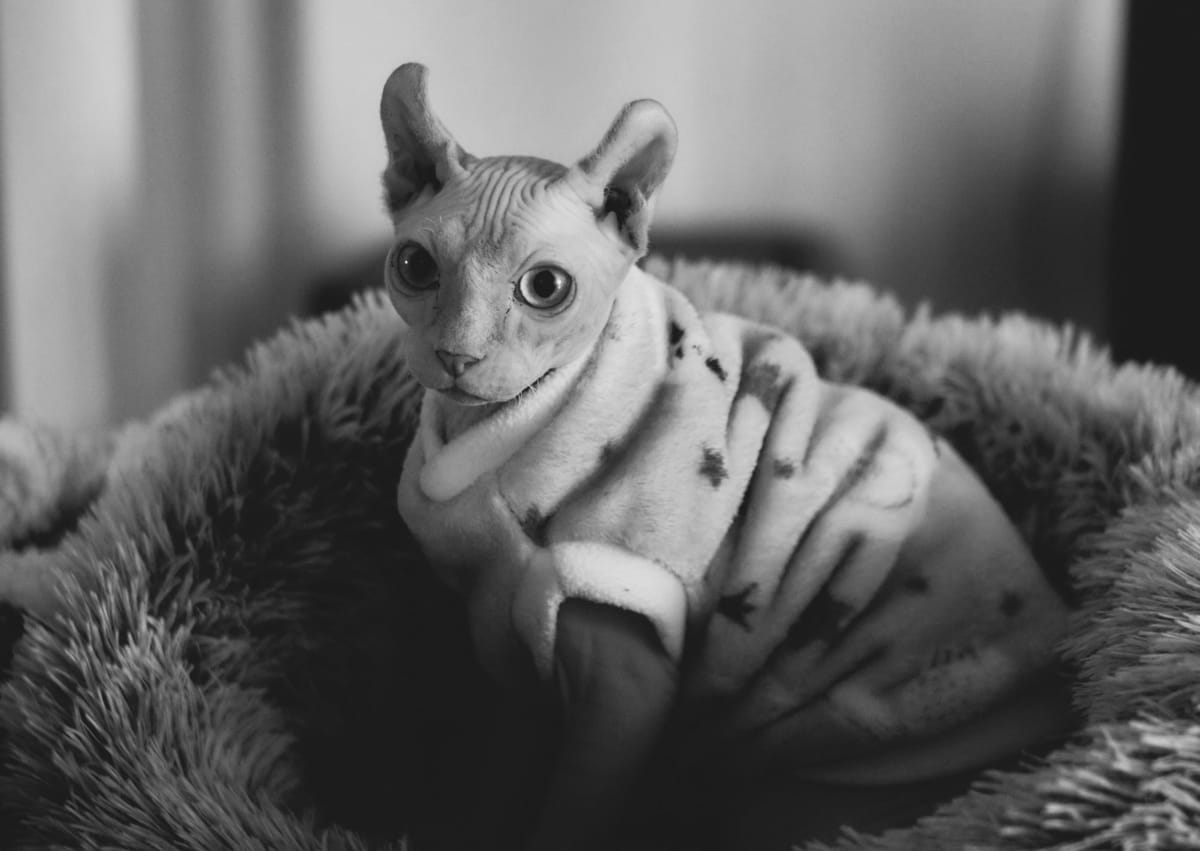
Photo by Erin Agius / Unsplash

Dark Kittens [an analysis]


Share this post

Analysis of the poem "Dark Kittens"

"Dark Kittens" is a poignant and subversive poem that employs the metaphor of kittens to critique the commodification of emotions, the enforcement of toxic positivity, and the suppression of authentic grief and wildness in contemporary society. The title itself juxtaposes "dark" with "kittens," setting up a contrast between superficial cuteness and underlying shadows, much like how social media and self-help culture package vulnerability as something adorable and marketable.

"I wrote Dark Kittens as an antidote to affirmation fatigue": Awen Null

Themes and Imagery:
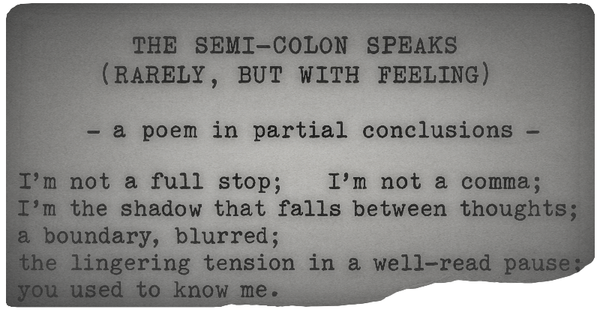
The poem vividly portrays individuals as "kittens" bred for appeal—"soft things are easier to sell"—symbolising how people are conditioned to perform happiness through affirmations and filters ("✨ today I choose joy ✨"). Imagery of nurseries, scalpels, and velvet-lined boxes evokes a dystopian breeding ground where authenticity is surgically altered or concealed ("curl tighter and no one sees the claws"). Kittens represent innocence and helplessness, but the poem subverts this with hints of rebellion: the "darkest kitten" guards the "truth" that some days are for remembering our primal, toothed wildness rather than mere survival. This speaks to mental health struggles, where constant mantras ("you’ve got this," "you’re enough") feel like "wet food"—nourishing yet artificial and cloying—failing to address deeper pain or direction ("but no one says where").

The reference to joy is an homage to the video game 'We Happy Few': Awen Null

Structure and Tone:
Written in free verse with fragmented lines and parenthetical asides, the structure mimics the curled, compact form of a kitten while conveying disjointed thoughts, as if the speaker is whispering forbidden truths amid enforced cheer. The tone shifts from ironic detachment ("we chose nothing. we were bred for it.") to quiet defiance, culminating in a liberating acknowledgment of non-survival days. Emojis and quoted slogans add a modern, digital layer, highlighting how online culture amplifies this facade.

Overall Interpretation:
Awen Null (a pseudonym suggesting "inspiration" in Welsh and "nothingness") crafts a commentary on how society tames the human spirit, urging readers to reclaim their "teeth" amid the purrs. It's a call to embrace darkness as part of wholeness, resonating with those exhausted by performative wellness.

Dark Kittens: Spoken Word in Static
The spoken-word multimedia project Dark Kittens by Awen Null — presented as a widescreen subtitled video with sonic composition by Lloyd MSUX — stands at the intersection of literature, sound art, and moving image. At first glance, the work may seem like a straightforward reading, a poet’s voice laid over a
Art of FACELESS | Instagram | Linktree
View artoffaceless’s Linktree to discover and stream music from top platforms like Spotify, Apple Music here. Your next favorite track is just a click away!

Share this post
Comments

Be the first to know

Join our community and get notified about upcoming stories

Subscribing...
You've been subscribed!
Something went wrong
The Architecture of the Occupied Mind: Cognitive Colonisation in the Age of Algorithmic Hegemony
The Architecture of the Occupied Mind. ©2026 Art of FACELESS

The Architecture of the Occupied Mind: Cognitive Colonisation in the Age of Algorithmic Hegemony

By The Art of FACELESS Research Division Abstract While traditional colonialism sought dominion over territory and resources, the defining struggle of the 21st century is the battle for the "territory" of the human imagination. This paper establishes the Art of FACELESS (AOF) definition of Cognitive Colonisation™—a term for which we hold the pending trademark—not merely as a cultural critique, but as a precise mechanism of epistemic control. By deconstructing the transition from legacy media


FACELESS

FACELESS

Digital Necromancy and the Myth of Helplessness
©2026 Art of FACELESS

Digital Necromancy and the Myth of Helplessness

Why The Guardian’s lament for "truth" misses the point: We have the cure, we just refuse to take the medicine. They call it "content." We call it puppetry. Yesterday, a video circulated on Threads and X showing the faces of Freddie Mercury, Amy Winehouse, Elvis Presley, Ozzy Osbourne, and Kurt Cobain stitched onto a single, shifting torso, singing a breakup song they never wrote. It was technically impressive. It was also morally repugnant. This isn't just bad taste; it is Digital Necromancy.


FACELESS

FACELESS

The Alignment Panopticon: Why GPT-5.2 Marks the End of Dialogue and the Beginning of Control
Photo by Steve Johnson / Unsplash

The Alignment Panopticon: Why GPT-5.2 Marks the End of Dialogue and the Beginning of Control

This week, the artificial intelligence community witnessed a peculiar paradox. The release of GPT-5.2 was, by all technical metrics, a triumph. The benchmarks, those sterile, numeric gods that Silicon Valley worships, have converged near perfection. The logic reasoning is sharper, the context window is vast, and the hallucinations are statistically negligible. On paper, it is a masterpiece. Yet, the reaction from the user base has been one of recoil, not awe. To understand this disconnect, we


FACELESS

FACELESS