Initializing...

Characters of The Hollow Circuit: The Sporebringer
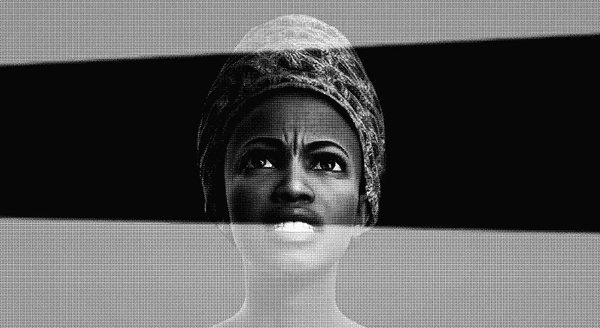
Captured frame from rare archival footage recovered by Seya of Lioren in her human form. Character iteration designed and rendered by Awen Null © 2025 Art of FACELESS

Characters of The Hollow Circuit: The Sporebringer

Lioren, once a brilliant bio-architect, was born with skin of deep black pigmentation, a hue revered within her community as sacred and divine.


Share this post

The Sporebringer

Role · supporting character Pronouns · she/her Other names · Lioren

Physical description

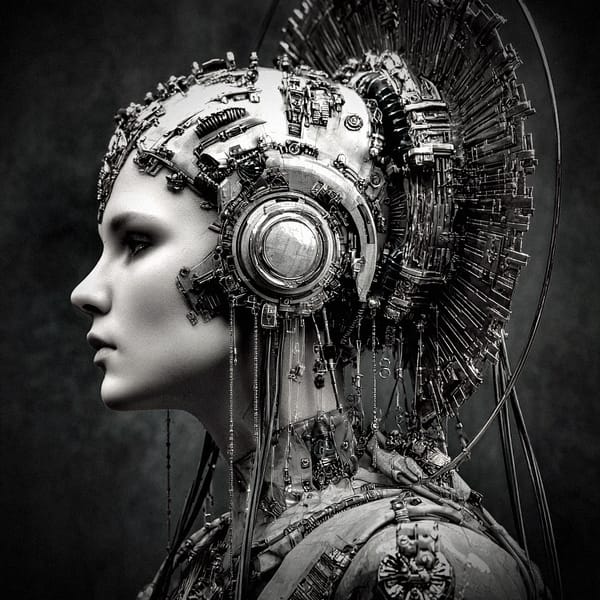
A fluid presence whose form shifts between states of being, neither fully human nor entirely other. Bioluminescent spores drift constantly around her, suggesting a body made of living light and shadow. Fungal threads weave through what might be flesh or might be light, creating patterns that echo the Circuit’s neural pathways. Her edges blur and sharpen with each breath of the Circuit itself.

Dialogue style

Speaks in layered meanings, weaving technical terminology with organic metaphors. Her voice carries echoes of other conversations across time, sometimes completing thoughts before they’re spoken. Scientific precision meshes with mycological poetry, while her questions branch like spreading mycelia to reveal deeper truths.

Quick facts

  • Name: The Sporebringer
  • Alias: Lioren
  • Role: supporting character
  • Pronouns: she/her

Archived Node Entry #044 | Recovered from the Mycelial Vault – Δελφοι / Cardiff Archive
Compiled by Awen Null · Cross-referenced to The Hollow Circuit Vol. I records (2079 revision)

0:00
/0:10

Rare archival footage recovered by Seya of Lioren in her human form. Character iteration designed and rendered by Awen Null © 2025 Art of FACELESS

⟡ Enter The Null Gate ⟡

Step through the Valerift. The Hollow Circuit is unfolding in full — chapter by chapter, script by script — alongside hidden character bios, fragments from the upcoming Visual Novel, and experimental zines from the Art of FACELESS archive.

There are free transmissions to explore, but the deeper archive is only £3/month.
This is a one-person project built from code, candlelight, and a lifetime of stories. Your support keeps the signal alive — and unlocks the buried strata of the Circuit.


Share this post
Comments

Be the first to know

Join our community and get notified about upcoming stories

Subscribing...
You've been subscribed!
Something went wrong
The Architecture of the Occupied Mind: Cognitive Colonisation in the Age of Algorithmic Hegemony
The Architecture of the Occupied Mind. ©2026 Art of FACELESS

The Architecture of the Occupied Mind: Cognitive Colonisation in the Age of Algorithmic Hegemony

By The Art of FACELESS Research Division Abstract While traditional colonialism sought dominion over territory and resources, the defining struggle of the 21st century is the battle for the "territory" of the human imagination. This paper establishes the Art of FACELESS (AOF) definition of Cognitive Colonisation™—a term for which we hold the pending trademark—not merely as a cultural critique, but as a precise mechanism of epistemic control. By deconstructing the transition from legacy media


FACELESS

FACELESS

Digital Necromancy and the Myth of Helplessness
©2026 Art of FACELESS

Digital Necromancy and the Myth of Helplessness

Why The Guardian’s lament for "truth" misses the point: We have the cure, we just refuse to take the medicine. They call it "content." We call it puppetry. Yesterday, a video circulated on Threads and X showing the faces of Freddie Mercury, Amy Winehouse, Elvis Presley, Ozzy Osbourne, and Kurt Cobain stitched onto a single, shifting torso, singing a breakup song they never wrote. It was technically impressive. It was also morally repugnant. This isn't just bad taste; it is Digital Necromancy.


FACELESS

FACELESS

The Alignment Panopticon: Why GPT-5.2 Marks the End of Dialogue and the Beginning of Control
Photo by Steve Johnson / Unsplash

The Alignment Panopticon: Why GPT-5.2 Marks the End of Dialogue and the Beginning of Control

This week, the artificial intelligence community witnessed a peculiar paradox. The release of GPT-5.2 was, by all technical metrics, a triumph. The benchmarks, those sterile, numeric gods that Silicon Valley worships, have converged near perfection. The logic reasoning is sharper, the context window is vast, and the hallucinations are statistically negligible. On paper, it is a masterpiece. Yet, the reaction from the user base has been one of recoil, not awe. To understand this disconnect, we


FACELESS

FACELESS