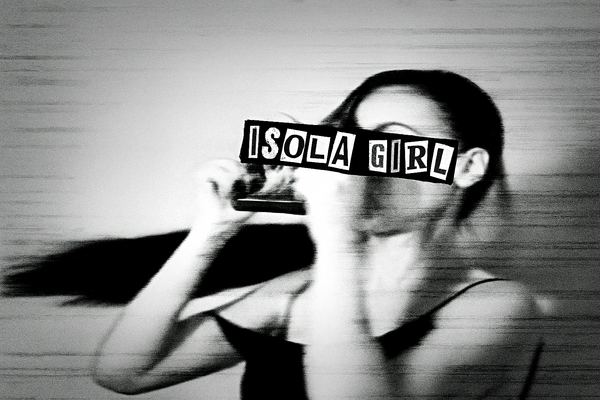
A reflective essay from an artist who was born in the 60s
by @ichbinLLOYD
There was a time, not so long ago, when every photograph had a signature. A visible watermark. A copyright warning. A timestamp. An analogue trace of effort and ownership.
In the early days of the internet, we guarded our work like it mattered. Because it did. You shot on film, processed it by hand, scanned it, signed it, and uploaded it with caution. Not vanity. Not for likes. Not for virality. But because it meant something.
And then, the iPhone happened.
Something shifted. Suddenly, everyone was a photographer. DSLRs got cheaper, social media faster. Platforms promised connection, community, and freedom. But the deal was rigged. We fed the machine with our art. For free. And in return, we got little hearts.
Somewhere along the way, we stopped watermarking. We stopped asking to be paid. We gave our creativity away in exchange for the illusion of relevance.
Now we cry foul.
Now we’re angry about AI. About training sets. About stolen styles. But didn’t we hand it over? Didn’t we share endlessly—unquestioningly—for years?
This isn’t victim-blaming. I include myself in this. I was there. I’m still here. I’ve spent decades as an artist, a professional photographer, a documenter of light and form and flesh. I made a living in fashion when the work still paid. I saw the switch from analogue to digital—and now, with intention, I’m switching back.
Why?
Because analogue has weight.
It demands time.
It respects the process.
Each negative I shot, each contact sheet I marked with grease pencil, each print I pulled—these are artefacts. Proofs. Not pixels. Their value has only increased. Personally. Creatively. Financially.
And here’s the part I know won’t be popular:
Artists have to take some responsibility.
We were seduced. We overshared.
We confused exposure with compensation.
We confused engagement with value.
Now, the same platforms we trusted are mining our work to feed machines. And we’re surprised?
I’m not anti-AI. I’m not anti-tech. I’ve always been an early adopter—both curious and cautious. I still make music. I game. I build. I design. I code when I have to. I’m not some angry man yelling at clouds. But I am someone who’s seen it turn. Who lived before all this. And who might live just long enough to see what comes next.
I’ve probably got fifteen years left to do what I do. Maybe less. I’m not afraid of that. But it gives you perspective.
You stop caring about trends. You stop apologising for not being on TikTok. You start thinking about what matters. And for me? That’s art. That’s the story. That’s what’s still handmade.
I’m not here to preach. I’m here to talk. To share. To open a door to real, adult conversation—about value, legacy, creativity, and survival.
If you’ve been feeling this too—
If you’re quietly working, uncertain where you fit—
If you’ve got hard drives full of unseen work or sketchbooks nobody’s ever opened,
If you’ve ever felt like the world moved on without you,
I see you.
Let’s start building something again from the ground up.
Art is life.
And life’s not over yet.