Art of FACELESS | artoffaceless.com | March 2026
We are writing this from Athens.
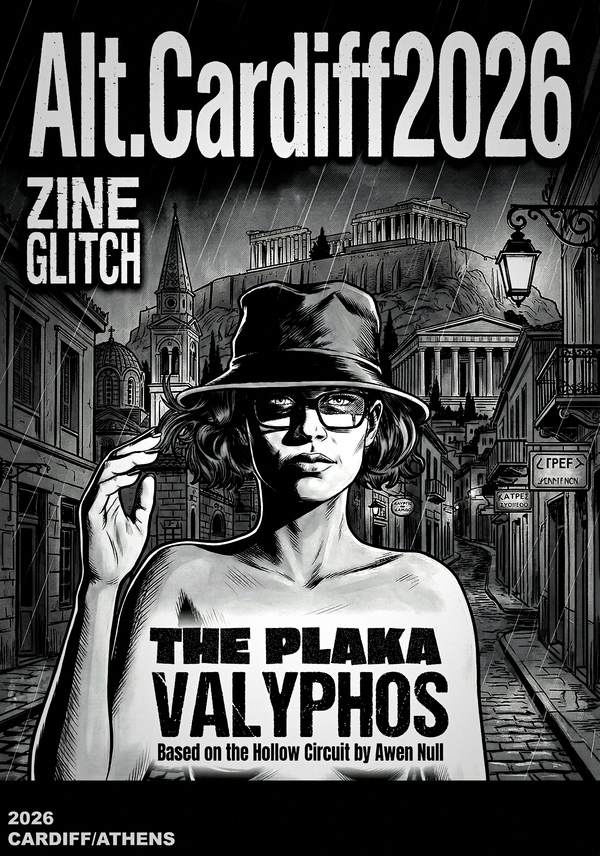
We came here to launch The Hollow Circuit Book One, 2nd Edition — a transmedia project, rooted in questions about facelessness, surveillance, digital resistance, and what it means to make art at the intersection of human vision and machine architecture. We did not expect to arrive in the middle of a war. Not the kind with weapons. The kind that happens when frightened people, facing a real threat, start destroying each other instead of the thing that frightens them.
So we made something. And we need to talk about why.
Athena in the Age of the Circuit
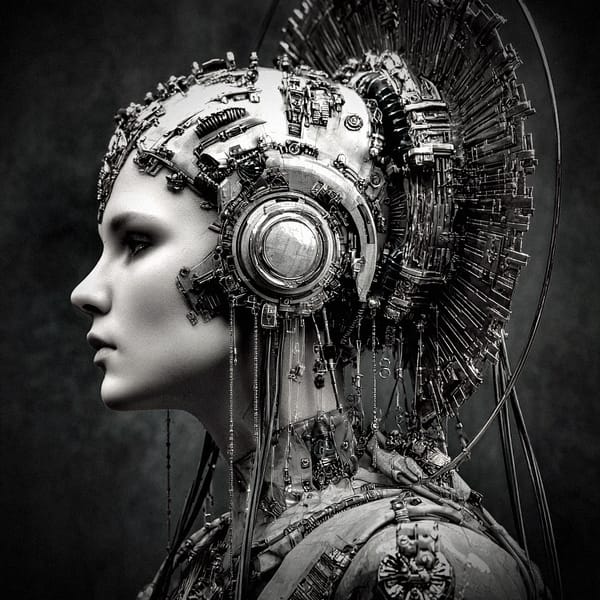
The images you're looking at were created using Midjourney, directed and composed by us, published on @AthenianAI and posted here without apology.
We say that directly because the current climate demands directness. There is a witch-hunt happening across social media where artists are being interrogated, harassed, and publicly shamed for using AI tools in their creative practice. We have watched respected colleagues be torn apart. We have watched disabled artists be told their accommodations make them frauds. We have watched the language of authenticity weaponised by people who seem to have forgotten that every tool we now consider legitimate was once the subject of exactly the same hysteria.
Photography was going to kill painting. Photoshop was going to kill photography. Sampling was going to kill music. The synthesiser was going to kill the orchestra.
None of those things happened. What happened instead was that artists — the brave ones, the curious ones, the ones who refused to be policed by consensus — found new languages.
We are finding one now.
What These Images Are
Athena (colour version) animated using Midjourney ©2026 Art of FACELESS
Athena Reborn: The Architectural Singularity is a visual study rooted in The Hollow Circuit™ — our conceptual framework for the paradoxical space where the human and the machine meet, where the biological Hollow and the technological Circuit dissolve into each other.
We came to Athens with that framework in our hands and found it everywhere. In the Ancient Agora. In Plaka. In the Byzantine grid of streets that somehow still breathe. In a city that has been conquered, rebuilt, burned, and rebuilt again, and still carries the memory of every version of itself simultaneously.
Athena felt right. The goddess of wisdom, craft, and strategic intelligence — not brute force, but the application of skill and knowledge to difficult problems. She is, if you squint at it correctly, the patron saint of exactly what we are trying to do: use every available tool, including the most powerful and contested ones, in service of something worth making.
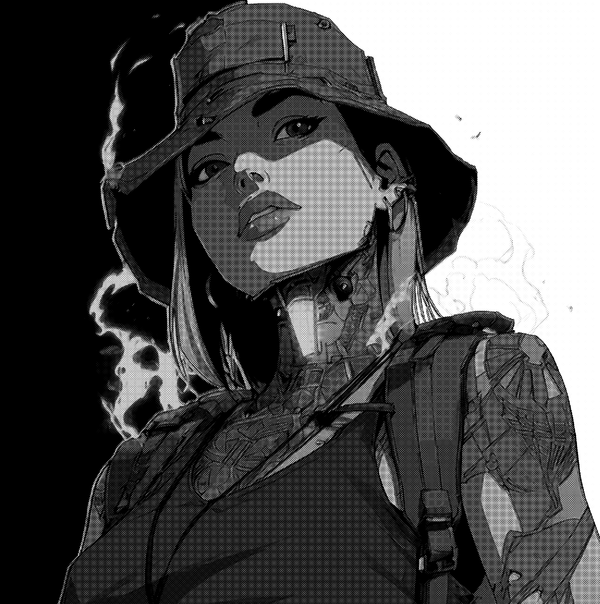
The headdress in these images is not armour anymore. It is an array of oscillators, data-reception fins, and processing architecture. Wisdom, in the age of AI, is the capacity to hold infinite streams of information and still make something coherent and human from them. The gaze remains Athenian — composed, directed, rooted in a human consciousness that is guiding everything the machine does.
That is the workflow. That is what these images document. A human vision, expressed through a machine, shaped by decades of accumulated creative methodology and a body of research serious enough to carry active trademark protection.
If a platform classifier cannot see that, the problem is with the classifier.
Stop Attacking Each Other
This is the part we need to say plainly, from the heart, with whatever authority 16 years of independent creative practice gives us.
Artists: stop attacking other artists.
The energy being spent on harassment campaigns against AI-using creators is energy stolen from the fight that actually matters. The real threat to creative livelihoods is not the disabled artist using AI tools to bridge the gap between their vision and their physical capacity. It is not the independent creator using Midjourney to produce work they could not otherwise afford to produce. It is not the 3D artist whose Reallusion render gets misclassified by a Pinterest bot.
The real threat is structural. It is the corporations scraping creative work without consent to train systems they will sell back to us. It is the platforms deploying unvalidated classifiers with 50% false positive rates and no appeals process because accuracy is expensive and compliance theatre is cheap. It is the venture capital logic that treats creative work as training data, as content, as a resource to be extracted rather than a practice to be supported.
That is the fight. That is where the anger belongs.
Capitalism does not care whether you use a brush or a neural network. It will extract value from both equally, if you let it. The question is not which tools are pure enough — it is who owns the infrastructure, who controls the classification systems, who sets the terms under which creative work is seen or suppressed.
We are in Athens, where democracy was invented, thinking about this. The agora was not a pure space. It was contested, argued over, fought for, and regularly corrupted. What made it matter was that people showed up and kept arguing. They did not retreat into purity tests about who deserved to speak.
The Accessibility Dimension
We will say this every time we have the platform to say it, because it needs to be said until it lands.
Disabled artists using AI tools are not frauds. They are not lesser artists. They are artists using the tools that allow them to participate in creative practice at all.
AI as an adaptive exoskeleton for the imagination — that is not a metaphor we use lightly. For artists for whom traditional fine motor tasks present barriers, for whom the cognitive load of certain production processes is prohibitive, for whom physical execution and creative vision have been kept apart by the accidents of embodiment — these tools are not shortcuts. They are access ramps.
Attacking those artists, misclassifying their work, suppressing their content, holding them to a standard of "pure" manual production that their bodies may not allow — that is not protecting art. It is gatekeeping it. And it is exactly the kind of gatekeeping that the people with the most power in this industry have always used to keep certain voices out.
We have formally submitted this position to the European AI Office. The Code of Practice that will govern how platforms classify AI content is being finalised before August 2026. The window for submissions is closing. If you are a disabled artist, a disability rights organisation, or a creative industry body, your voice in that process matters more than any amount of platform argumentation.
What We Are Building Instead
We are not posting our portfolio work on platforms that misrepresent it. We are not performing for algorithms that will flag our craft as synthetic. We are not subsidising the content value of platforms that treat us as raw material.
The Null Gate access model is live—free browsing for published research and written work. Gallery access for portfolio content is on its way. Everyone pays now — not because we have abandoned the working-class DIY ethos that has always defined this practice, but because that ethos was never about giving your work away to corporations for free. It was about refusing to let money or institutional gatekeeping determine whose voice gets heard.
We are still refusing that. We are just directing the refusal more precisely.
The Hollow Circuit is in Athens. Athena is reborn in the circuit. And we are here, making work, arguing publicly, and refusing to be quiet about any of it.
The machine is the apprentice. The human vision is still in charge.
That is the whole point.
Lloyd Lewis is the founder of Art of FACELESS, established in Cardiff, Wales, in 2010. Currently in Athens for the launch of The Hollow Circuit Book One, 2nd Edition. Active trademark holder: The Hollow Circuit™, The Veylon Protocol™, Cognitive Colonisation™, and Hyperstition Architecture™.
 Read full bio
Athena Reborn: The Architectural Singularity
— Athenian AI (@AthenianAI) March 2, 2026
In the modern creative pipeline, the intersection of AI architecture and classical mythology isn't just a gimmick, it’s a digital resurrection. This visual study, inspired by Awen Null’s The Hollow Circuit™, reimagines Athena not as… pic.twitter.com/FxoueRWGmq