
Initializing...

Another Day, Another Medium Article — And They Lap It Up
Photo by Mike Hindle / Unsplash

Another Day, Another Medium Article — And They Lap It Up

Medium has become the mirror where AI narcissists meet to admire their own reflections.


Share this post

by Lloyd Lewis

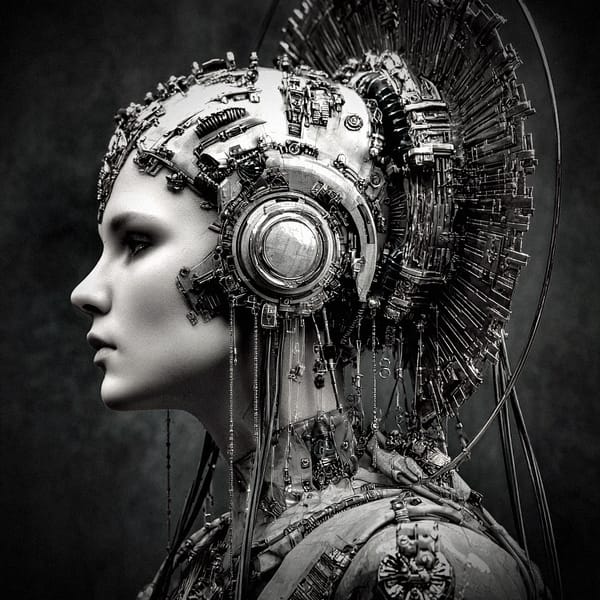
Another day, another breathless Medium post announcing the future of AI. You know the ones: shiny thumbnails, that familiar soft-focus portrait of a “founder” staring earnestly into the glow of their own imagined disruption. The titles are always the same — “The AI Bubble Is About to Burst,” “We Spent $47,000 Running AI Agents,” “How We’re Approaching AI-Generated Writing on Medium.”
And every time, the crowd gathers. The same applause. The same recycled insights. The same medium, never the message.

Let’s be clear. You won’t find any of that performative techno-spiritualism here.
No breathy “AI as muse” mythology. No Medium-style “transparency” editorials pretending to wrestle with the ethics of automation while quietly doubling ad impressions off the debate. What you’ll find here is lived, verifiable, and — most importantly — actually useful.


The Cult of the Prompt Prophet

The Medium AI scene has become its own religion.
You can spot the evangelists by their predictable liturgy:

“I asked ChatGPT to write my business plan. Here’s what happened.”
“Ten AI Tools That Changed My Life.”
“What Nobody Tells You About AI-to-AI Collaboration.”

They write these headlines like commandments, each one promising transcendence through automation. It’s techno-salvation repackaged for clicks. But beneath the gloss, it’s all the same sermon: pay attention to me while I pretend to demystify the machine.

Here’s the trick — they aren’t teaching, they’re farming. Farming traffic. Farming affiliate sign-ups. Farming “engagement metrics” for the Medium Partner Program, where each click is a prayer bead and each clap a tithe.
Medium was once built for writers. Now it’s a ghost mall of AI-generated op-eds about AI itself — a recursive ouroboros of content about content, a feedback loop that feeds itself until the lights flicker.


The Business Model Nobody Talks About

Let’s talk about the actual business model — not the “ethical creator economy” version. The real one.
Medium doesn’t pay for truth or originality. It pays for dwell time. The longer you scroll, the more valuable you are. Articles aren’t rewarded because they say something meaningful; they’re rewarded because they keep you reading long enough for another pageview.

And here’s the beautiful irony: AI writing tools make this easier than ever.
Churn out five half-coherent think-pieces a week, sprinkle in some buzzwords (“agency,” “alignment,” “AI-to-AI communication,” “MCP”), add a few curated “takeaways,” and boom — you’ve got an algorithm-friendly portfolio.

Medium’s “AI transparency” policies are just camouflage. They’re not protecting the reader from synthetic text. They’re protecting the platform from losing credibility while quietly profiting from exactly the thing they claim to regulate.

The moral panic is monetised.
The authenticity debate is SEO-optimised.
The “AI disclosure” note at the bottom is there to absolve everyone — a digital confessional box for the age of automation.


The Infinite Loop of Medium Mythology

Medium has become the mirror where AI narcissists meet to admire their own reflections.
Every day brings a new myth:

  • The AI Bubble Is About to Burst.
  • But Actually, The Next Bubble Is Already Growing.
  • Here’s What Nobody Tells You About Prompt Engineering.

The subtext? We are the chosen interpreters of the machine.
They build entire personal brands on that illusion — that they’ve seen behind the curtain and returned to tell the tale. But what they’ve actually done is reinvent the same 2010s growth-hacking hustle in a new wrapper.

This isn’t journalism. It’s not research. It’s theatre.
And like all theatre, it relies on willing suspension of disbelief — the fantasy that this time the revelation means something, that this time the insights are fresh.

But the truth is simpler, duller, and less profitable:
AI is already normal.
The novelty has worn off.
The revolution has been productised, packaged, and sold back to you as a subscription tier.


What We Do Differently

At Art of FACELESS, we build with the tools, not around them.
We don’t mythologise AI — we operationalise it.
It’s a brush, not a god. A hammer, not a halo.

We refuse to turn process into performance.
We won’t pretend that feeding prompts into a chatbot makes us visionaries.
And we definitely won’t call it “collaboration” when it’s just automation.

What we publish — whether it’s a zine, a print, or a visual novel — has verifiable labour behind it.
Real time. Real mistakes. Real hands.
That’s what authenticity means when the rest of the web is running on simulacra.


Medium’s Future Is Its Past

Medium started as a promise — a place for longform thought outside the ad swamp.
Now it’s just another swamp with better typography.
You can almost hear the server racks groan under the weight of half-baked “AI insights” and “productivity hacks.” The same three graphs of the “AI hype cycle.” The same recycled hope that writing about the future will somehow summon it.

But here’s the catch: the writers who are truly using AI as part of their lived process — the ones experimenting, failing, building — aren’t on Medium. They’re too busy making.
They’re on small sites, hidden forums, self-hosted servers, print zines, or dusty blogs with zero SEO.
They aren’t chasing clicks — they’re tracing signal.

When the AI bubble finally pops, Medium will go down with it — not because AI killed writing, but because writing stopped being writing and became marketing.


So Here’s the Difference

We don’t want followers.
We want witnesses.
We don’t want clicks.
We want proof of work.
We don’t want to farm — we want to grow.

You won’t find us “debating” the ethics of AI while building a paywall around the discussion. You’ll find us showing what’s possible, then letting you verify it yourself.

The future of art, writing, and technology won’t be found in Medium’s next trending tag.
It’ll be found in the offline, the verifiable, the lived.
And when the last “AI Mythology” headline fades, the artists who actually built something will still be here — quietly, facelessly, doing the work.

Art of Faceless — Field Transmission

LLOYD LEWIS

Founder · Art of Faceless · Philosophy & Multimedia

Statement Lloyd Lewis is the founder of Art of FACELESS (AOF) — a philosophy-driven publishing network exploring the intersection of AI, analogue art, and post-truth culture. A multimedia artist and writer living with a degenerative neurological disorder, he challenges digital mythologies through verifiable, grounded practice rather than performance.

Tools as instruments — not idols.
Proof of work over promises.
Offline as archive; online as signal.
Every output is a designed event.

His practice spans fiction, critical essays, print zines, video, and interface-native pieces that collapse biography into medium — turning even this bio into a staged, performative artifact on a black field: a floating box; a controlled glitch; a refusal to decorate the void with empty claims.

Philosophy Multimedia AI & Culture Publishing Post-Truth
Art of FACELESS | Instagram | Linktree
View artoffaceless’s Linktree to discover and stream music from top platforms like Spotify, Apple Music here. Your next favorite track is just a click away!

Share this post
Comments

Be the first to know

Join our community and get notified about upcoming stories

Subscribing...
You've been subscribed!
Something went wrong
The Architecture of the Occupied Mind: Cognitive Colonisation in the Age of Algorithmic Hegemony
The Architecture of the Occupied Mind. ©2026 Art of FACELESS

The Architecture of the Occupied Mind: Cognitive Colonisation in the Age of Algorithmic Hegemony

By The Art of FACELESS Research Division Abstract While traditional colonialism sought dominion over territory and resources, the defining struggle of the 21st century is the battle for the "territory" of the human imagination. This paper establishes the Art of FACELESS (AOF) definition of Cognitive Colonisation™—a term for which we hold the pending trademark—not merely as a cultural critique, but as a precise mechanism of epistemic control. By deconstructing the transition from legacy media


FACELESS

FACELESS

Digital Necromancy and the Myth of Helplessness
©2026 Art of FACELESS

Digital Necromancy and the Myth of Helplessness

Why The Guardian’s lament for "truth" misses the point: We have the cure, we just refuse to take the medicine. They call it "content." We call it puppetry. Yesterday, a video circulated on Threads and X showing the faces of Freddie Mercury, Amy Winehouse, Elvis Presley, Ozzy Osbourne, and Kurt Cobain stitched onto a single, shifting torso, singing a breakup song they never wrote. It was technically impressive. It was also morally repugnant. This isn't just bad taste; it is Digital Necromancy.


FACELESS

FACELESS

The Alignment Panopticon: Why GPT-5.2 Marks the End of Dialogue and the Beginning of Control
Photo by Steve Johnson / Unsplash

The Alignment Panopticon: Why GPT-5.2 Marks the End of Dialogue and the Beginning of Control

This week, the artificial intelligence community witnessed a peculiar paradox. The release of GPT-5.2 was, by all technical metrics, a triumph. The benchmarks, those sterile, numeric gods that Silicon Valley worships, have converged near perfection. The logic reasoning is sharper, the context window is vast, and the hallucinations are statistically negligible. On paper, it is a masterpiece. Yet, the reaction from the user base has been one of recoil, not awe. To understand this disconnect, we


FACELESS

FACELESS